
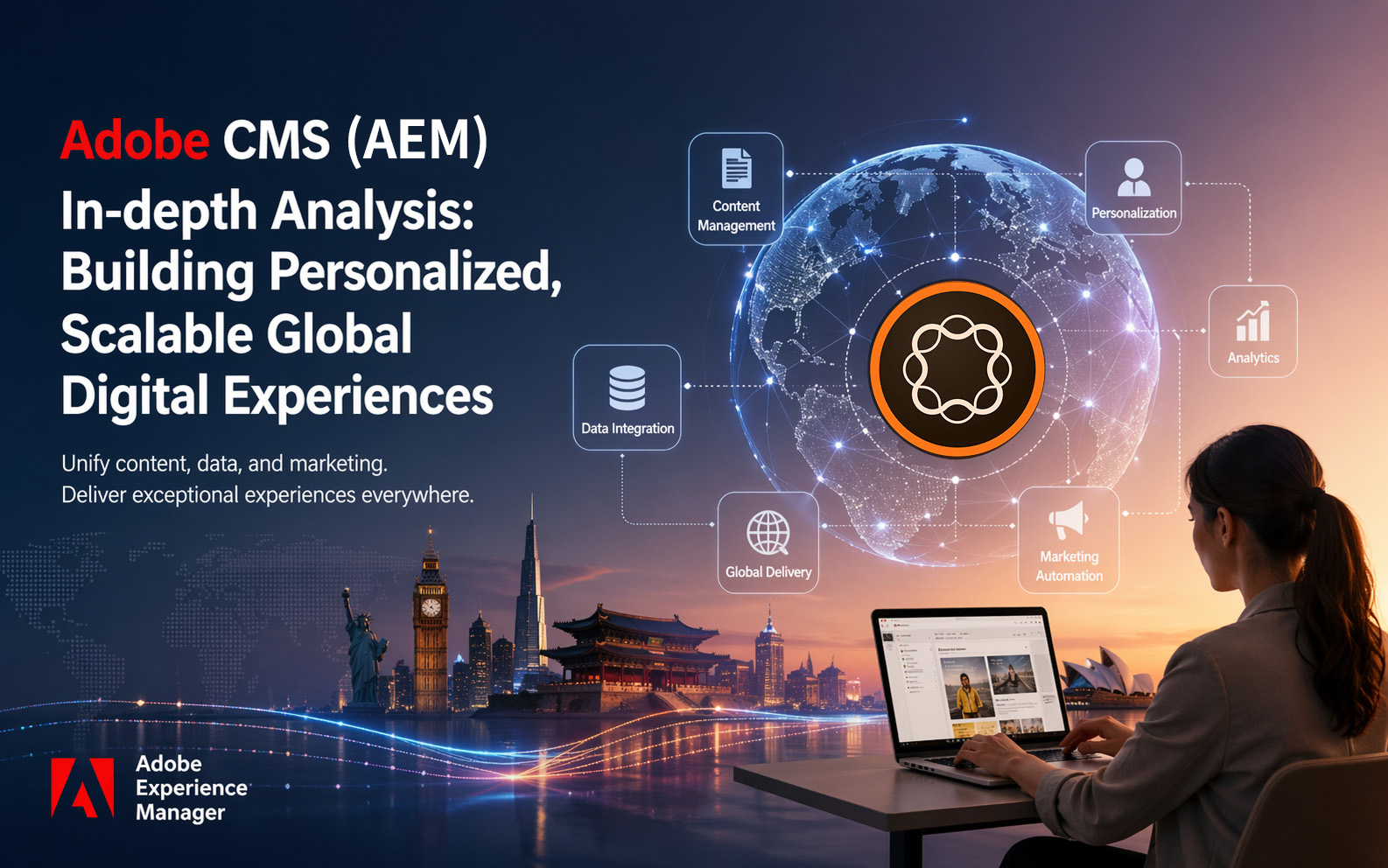
Adobe CMS (AEM) In-depth Analysis: Building Personalized, Scalable Global Digital Experiences
AEM Sites, Content Management System (CMS)
23 April 2026
- Why Enterprises Need a Next-Generation CMS Platform
- Adobe CMS (AEM) Platform Positioning
- AEM Core Architecture and Key Capabilities
- How AEM Supports Global Multi-Site and Multilingual Operations
- How AEM Delivers Personalized Digital Experiences
- AEM and Adobe Ecosystem Integration Benefits
- AEM Scalable Architecture and Headless Capabilities
- AEM Role in Enterprise Digital Architecture
- Key Success Factors for AEM Implementation
- Which Enterprises Are Best Suited for AEM
- Conclusion
- Why Enterprises Need a Next-Generation CMS Platform
- Adobe CMS (AEM) Platform Positioning
- AEM Core Architecture and Key Capabilities
- How AEM Supports Global Multi-Site and Multilingual Operations
- How AEM Delivers Personalized Digital Experiences
- AEM and Adobe Ecosystem Integration Benefits
- AEM Scalable Architecture and Headless Capabilities
- AEM Role in Enterprise Digital Architecture
- Key Success Factors for AEM Implementation
- Which Enterprises Are Best Suited for AEM
- Conclusion
1. Why Enterprises Need a Next-Generation CMS Platform
As enterprises deepen their digital transformation, corporate websites and digital channels have become one of the most critical customer touchpoints.
Traditional CMS platforms typically focus only on:
- Page editing
- Content publishing
- Basic website management
But modern enterprises need far more than a website management tool. They need a platform capable of supporting:
- Global multi-site operations
- Multilingual content management
- Personalized user experiences
- Integration with e-commerce, CRM, and data platforms
As a result, CMS is rapidly evolving into the core component of a Digital Experience Platform (DXP).
2. Adobe CMS (AEM) Platform Positioning
Adobe Experience Manager (AEM) is a core product within Adobe Experience Cloud, positioning itself not merely as a CMS, but as an enterprise-grade digital experience management platform.
AEM core capabilities include:
- Content Management
- Digital Asset Management (DAM)
- Multi Site Manager (MSM)
- Personalization
- Headless content delivery
Through these capabilities, enterprises can centrally manage global digital experiences.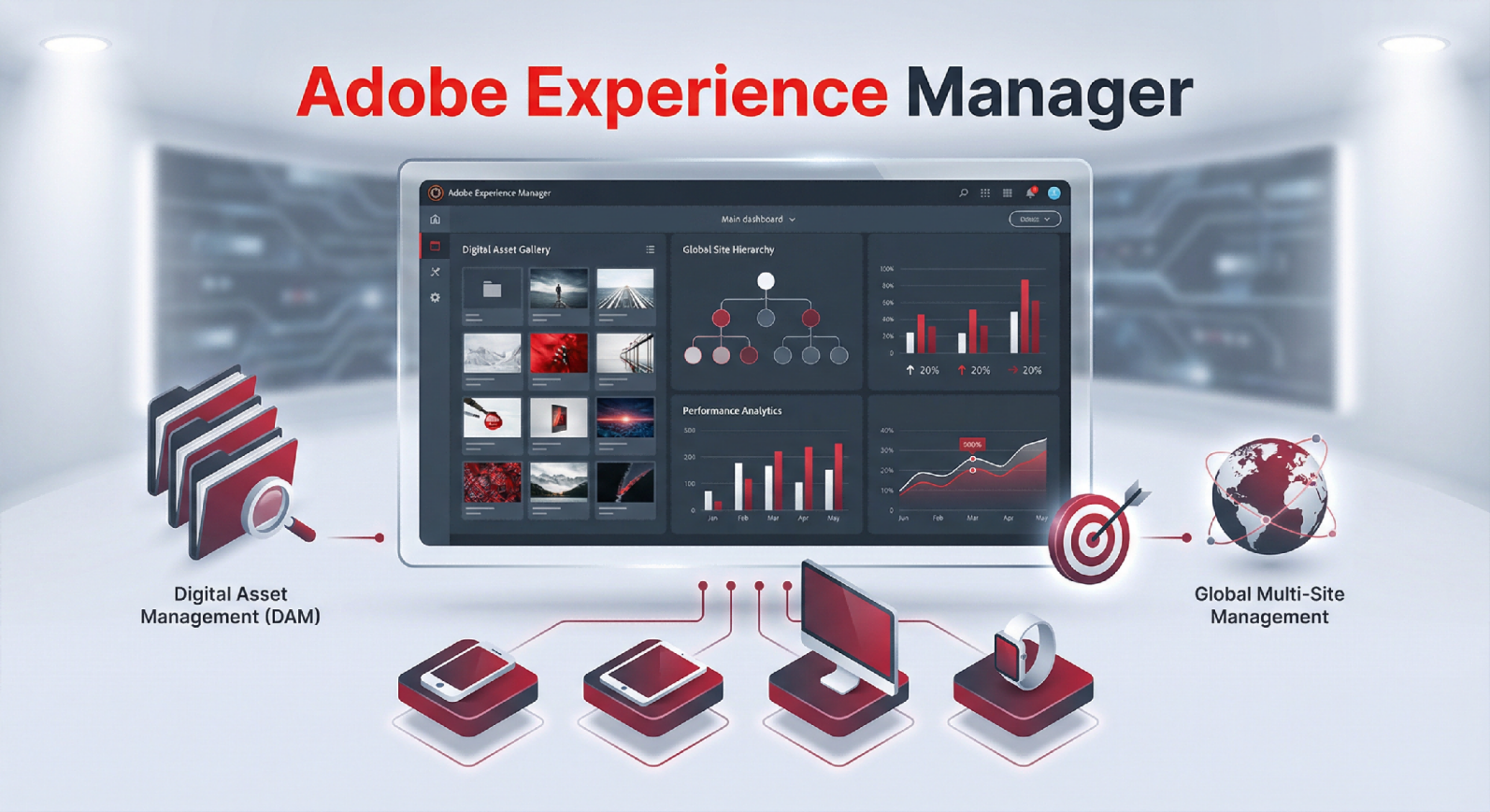
3. AEM Core Architecture and Key Capabilities
AEM architecture is designed for enterprise-grade scalability. Core components include:
Content Management (AEM Sites)
AEM Sites provides powerful page management and component-based content structures, supporting:
- Template-based page design
- Reusable content components
- Flexible information architecture
This enables content teams to efficiently create and maintain website content.
Digital Asset Management (AEM Assets)
AEM Assets is an enterprise-grade DAM system that centralizes management of:
- Images
- Videos
- Documents
- Brand materials
It also supports cross-channel content reuse.
Workflow and Access Control
AEM delivers comprehensive content governance capabilities, including:
- Content approval workflows
- Role-based access control
- Content version management
These capabilities are especially critical for large organizations.
4. How AEM Supports Global Multi-Site and Multilingual Operations
For global enterprises, multi-site management is a critical CMS capability.
AEM achieves this through Multi Site Manager (MSM):
- Unified management of multi-country sites
- Content inheritance and differential control
- Headquarters and regional team collaboration
For example:
-
Headquarters maintains core brand content
-
Regional teams manage local marketing pages
This ensures brand consistency while enabling localized operations.
5. How AEM Delivers Personalized Digital Experiences
Personalization is at the core of modern digital experiences. AEM combines user data to deliver:
- Dynamic content display
- Segmented content recommendations
- Region or industry-specific page customization
For example:
-
New visitors see brand introduction
-
Returning customers see product upgrade information
-
Different countries see different content versions
This personalization capability significantly improves user experience and conversion rates.
6. AEM and Adobe Ecosystem Integration Benefits
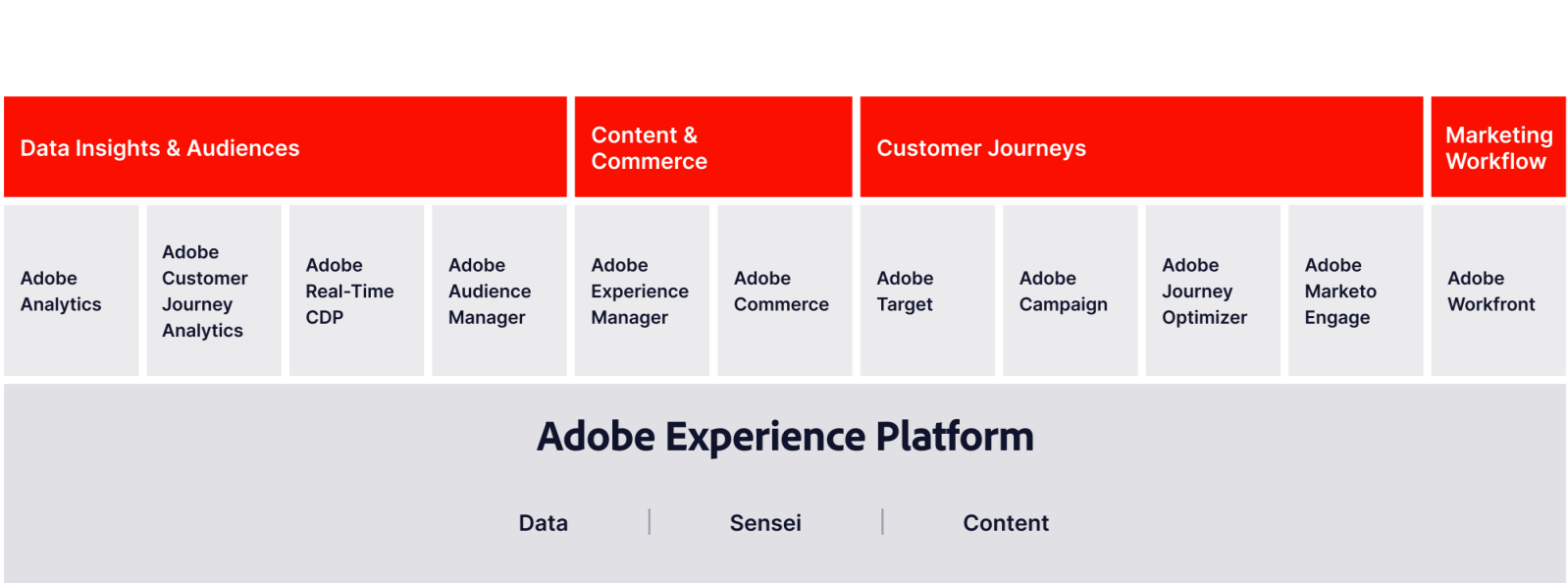
One of the greatest strengths of the Adobe CMS system is its deep integration with Adobe Experience Cloud.
For example:
-
Integration with data analytics platforms
-
Integration with customer data platforms
-
Integration with e-commerce platforms
Integration with Data Analytics Platforms
Combined with Adobe Analytics, you can:
Analyze user behavior
Optimize content strategies
Improve conversion rates
Integration with Customer Data Platforms
Through Adobe Real-Time CDP, you can:
Build unified customer profiles
Deliver cross-channel personalized experiences
Integration with E-Commerce Platforms
AEM integrates with Adobe Commerce to deliver:
Seamless content and commerce experiences
Product page personalization
Marketing campaign and product integration
7. AEM Scalable Architecture and Headless Capabilities
Modern digital experiences need to support a wide variety of channels.
Adobe CMS (AEM) provides Headless CMS capabilities, delivering content to different platforms through APIs.
Enterprises can distribute content to:

Website
Traditional web frontend rendering with responsive design support

Mobile App
Content delivery to iOS/Android apps via API

E-Commerce Platform
Integration with Shopify, Adobe Commerce, and other e-commerce systems

Smart Device
IoT device support and multi-terminal content distribution
This decoupled front-end and back-end architecture enhances development flexibility and system scalability.
8. AEM Role in Enterprise Digital Architecture
In mature enterprise digital architectures, Adobe CMS (AEM) typically serves as the content experience platform, collaborating with other systems:
-
E-Commerce Platform (transactions)
-
CRM (customer management)
-
CDP (customer data platform)
-
Analytics (data analysis)
Together, these form a complete digital experience ecosystem.
9. Key Success Factors for AEM Implementation
Success in AEM projects depends not only on technology but also on comprehensive planning. Key success factors include:
Define Content Architecture Design
Includes:
Information architecture
Page component systems
Content models
Establish Global Content Governance
Enterprises should clarify:
Headquarters and regional permissions
Content approval workflows
Update standards
Phased Implementation Strategy
AEM projects typically progress in phases:
Core website platform development
Multi-country site expansion
Personalization and data integration
This approach reduces project risk.
10. Which Enterprises Are Best Suited for AEM
AEM is particularly well-suited for enterprises that are:
- Global brands
- Multi-country operating enterprises
- Enterprises with large-scale content operations
- Enterprises requiring personalized experiences
- Enterprises needing data platform integration
For these enterprises, AEM delivers a long-term stable digital experience platform.
11. Conclusion: Adobe CMS (AEM) Is the Core of Enterprise-Grade Digital Experience Platforms
As digital experiences grow increasingly important, the role of CMS is also changing. Modern CMS platforms must support not only content management but also:
- Multi-channel content distribution
- Personalized experiences
- Data-driven marketing
- System integration and scalability
Adobe Experience Manager is the enterprise-grade platform designed for precisely these requirements. Through AEM, enterprises can build a scalable, sustainable global digital experience system.
Closing: Building a True Global Digital Experience Platform
If your enterprise is planning:
- Global website upgrades
- Enterprise CMS selection
- Digital experience platform development
Adobe Experience Manager is a solution worth serious evaluation.
Contact us to explore how AEM can help build a future-ready global digital experience platform.
Contact Us: Discuss Your AEM and Global Website Strategy with Our Consultants
Product Page: Learn About Adobe Experience Manager Enterprise Solutions
Related Reading
Related Articles
Enterprise AI MarTech Trends Analysis 2024-2029 Outlook Report
From AI content productivity tools to a core engine for revenue growth and marketing transformation
*The PDF will be sent directly to your inbox.
Email Error
Please enter a valid email address.
Thank You!
The whitepaper has been sent to your inbox. If you don’t see it, please check your spam or promotions folder.