
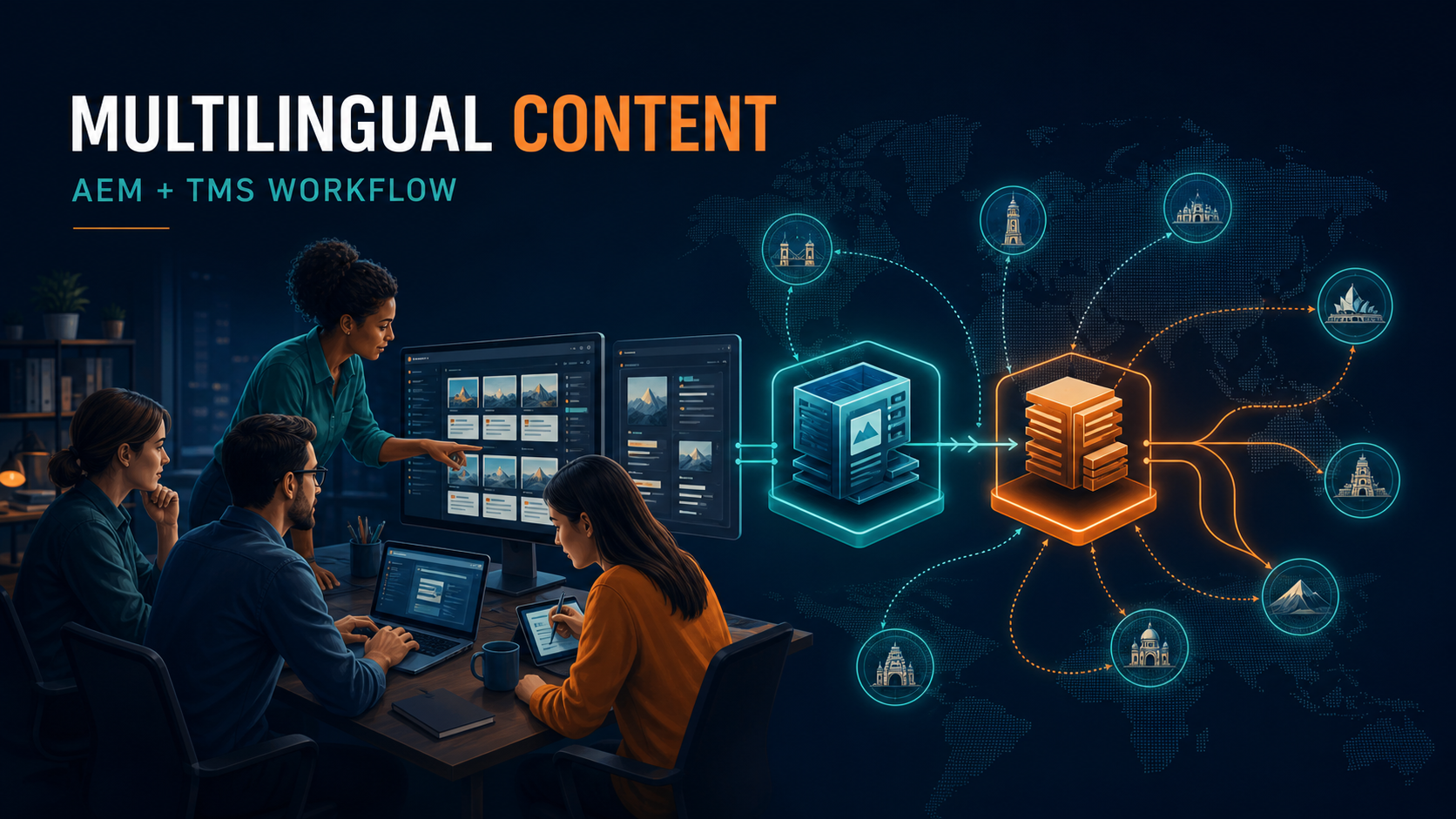
TransPerfect GlobalLink TMS Implementation Case: AEM Multilingual Content Management
Content Management System (CMS), TransPerfect GlobalLink
22 September 2026
- Multilingual websites need more than translation
- Case context: a travel website with fragmented language operations
- Solution: connect GlobalLink workflow to AEM
- Six implementation decisions that matter
- Measure operational outcomes, not only word count
- Implementation checklist
- Frequently asked questions
- Conclusion
- Further Reading
- Multilingual websites need more than translation
- Case context: a travel website with fragmented language operations
- Solution: connect GlobalLink workflow to AEM
- Six implementation decisions that matter
- Measure operational outcomes, not only word count
- Implementation checklist
- Frequently asked questions
- Conclusion
- Further Reading
When a website serves several markets, translation is not merely a purchasing task. It sits where content operations, brand governance, regulatory review, and publication meet. This article draws on LeadsTech’s public GlobalLink and AEM Cloud Service implementation case to explain how enterprises can make multilingual delivery more governable and measurable.
Summary
The goal of the public case was not to replace every translator with automation. It was to connect content creation, translation, human review, quality confirmation, and publishing into a traceable workflow. The client wanted to keep content in Adobe Experience Manager (AEM) while reducing copying, file transfers, and manual coordination. GlobalLink Enterprise Plus integrated with AEM Cloud Service so content could be sent for localization and returned after review, supported by translation memory, terminology, and reporting. The useful measures are cycle time, rework, language consistency, review load, and market-content visibility—not only price per word.
1. Multilingual websites need more than translation
Multilingual websites are normally maintained by marketing, content, legal, product, regional teams, and external language providers. Friction often begins when content leaves the CMS: an editor copies text into a file, a vendor downloads it, reviewer comments fragment across versions, and someone later pastes the result back into the site. Even when each person works carefully, it becomes difficult to know which version is approved, which markets are current, and whether a term has been used consistently.
For travel, retail, financial-services, and cross-border B2B organizations, this friction affects launch speed. Campaign pages, policy information, product content, and service notices can drift across languages. A small change becomes a new document, an email chase, and a manual status check. Without a defined workflow and permissions, the business also has limited auditability over who changed what and when.
LeadsTech’s public case addresses this kind of governance need. The client needed to manage multilingual content across digital channels while retaining AEM as the core content and digital-asset environment. The solution therefore had to connect source content, target languages, review responsibility, quality confirmation, and writeback status—not simply provide a machine-translation entry point.
2. Case context: a travel website with fragmented language operations
In the public case, the client spent substantial time copying content, uploading and downloading files, coordinating with providers, and manually supervising translation and QA. The client had used AI translation tools, but quality and user experience did not meet the required standard. Fast first drafts do not make content ready to publish when terminology, page context, approvals, and version history are unclear.
Consider a travel brand updating destination information in English, Traditional Chinese, Japanese, and other market languages. Its key questions are practical: when a source page changes, which target versions need work; which approved segments can be reused; who can approve regulatory or ticketing text; can reviewers see a translation in the page; and can content return without damaging components or layout? A translation-management system should provide answers at the workflow level.
3. Solution: connect GlobalLink workflow to AEM
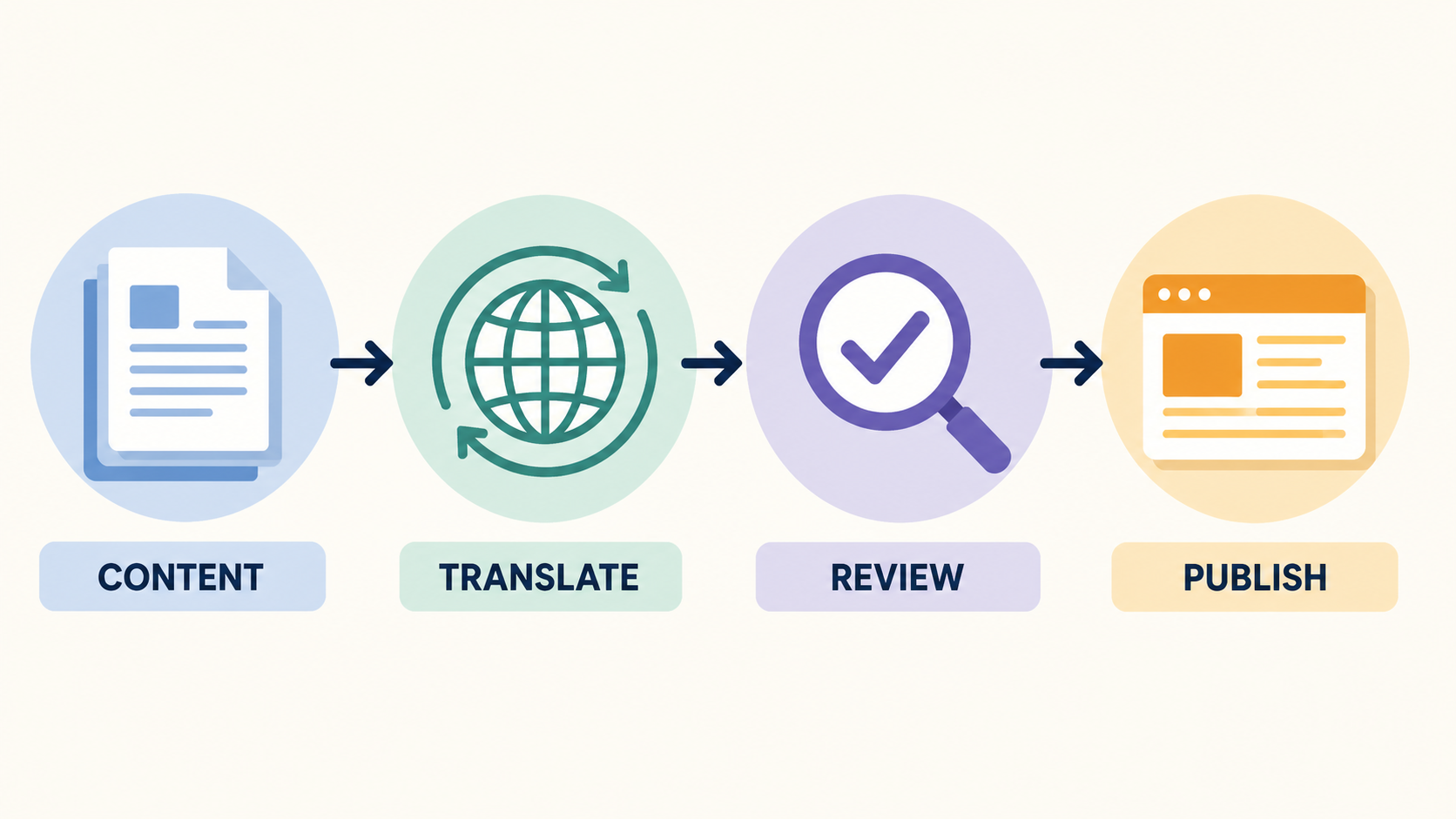
The public case used TransPerfect GlobalLink Enterprise Plus for AEM as a Cloud Service. Content is created and governed in AEM, then sent directly to GlobalLink for translation and localization; reviewed target-language content returns to AEM. That removes repeated exports, transfers, downloads, and copy-paste work while preserving traceability between source and target content.
This is not a black box that eliminates human judgment. AI draft translation can create an efficient starting point, while translators and reviewers use online review tools to refine brand voice, destination names, product language, regulatory text, and contextual meaning. The purpose is to route the right content to the right level of review instead of publishing an unchecked draft.
On-Page Preview is especially important. Reviewers can check content in the real page context rather than as isolated strings. A translation can be linguistically correct yet still create a poor experience if a headline wraps badly, a button no longer fits, or the surrounding context changes meaning. Reviewing in context brings quality control closer to the final customer experience.
4. Six implementation decisions that matter
First, define content scope and language priority. Not every page requires simultaneous translation. Separate core product, transactional or service information, evergreen content, news, and temporary campaign pages; then assign appropriate service levels and owners.
Second, define source-to-target change rules. When only one paragraph changes, the system and team should identify the work that actually needs attention. This avoids retranslating an entire page while preventing a materially changed source from leaving an old target page marked as current.
Third, design roles and approvals. Content editors, language providers, regional marketing, legal reviewers, and web publishers should not share the same permissions. Define who can submit, revise, approve, publish, and escalate an exception.
Fourth, govern translation memory and terminology. Translation memory enables approved segments to be reused. Terminology management protects product names, service names, place names, and brand language. Both need ownership; obsolete terminology cannot remain authoritative just because it was used in the past.
Fifth, test quality in the actual page. Check more than grammar: headings, buttons, forms, image alt text, dates, currencies, links, SEO metadata, and mobile presentation all need review. Sixth, plan post-launch improvement. Review backlog, overdue tasks, return reasons, terminology disputes, layout defects, and market-content completeness on a regular operating cadence.
5. Measure operational outcomes, not only word count
Word count and unit price remain useful for cost management, but they do not describe the effectiveness of a website workflow. Track the time from source update to market-ready publication, quality-return rate, reuse of approved content, number of incomplete language pages, terminology-resolution time, and campaign readiness against the planned date.
If the website connects with marketing systems, also observe indexation, form completion, inquiry quality, and service questions by market. These measurements should not be used to claim that a TMS alone caused a commercial outcome. They help the business locate the market, content type, or workflow stage that needs attention. A delay in legal review, for example, may call for clearer content-risk tiers rather than asking translators to work faster.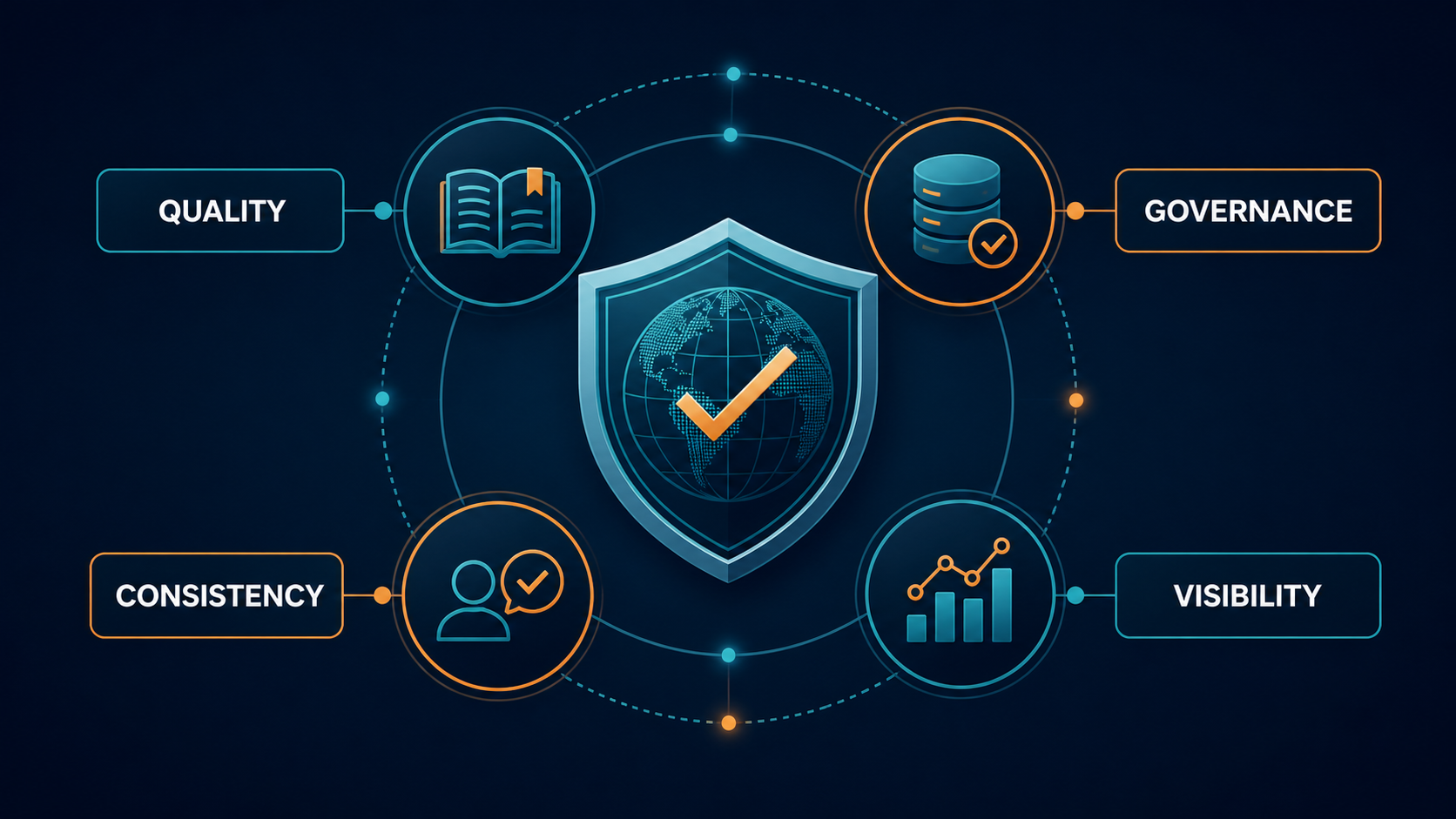
6. Implementation checklist
- Inventory website, app, email, and other content types that belong in the workflow.
- Define source languages, target languages, priority markets, service levels, and owners.
- Set permissions for submission, translation, review, approval, writeback, and publication.
- Assign ongoing ownership for terminology, brand language, and translation-memory maintenance.
- Test page-context review, components, links, metadata, alt text, and mobile display.
- Set rules for AI drafts, human review, high-risk content, and exceptions.
- Establish change, rollback, and audit-record rules for source and target content.
- Baseline cycle time, return rate, reuse, backlog, and language completeness.
7. Frequently Asked Questions
Does GlobalLink and AEM integration remove the need for human translation?
No. Automation reduces repetitive work, but brand, regulatory, product, and high-risk content should still receive the appropriate human review.
Is a translation management system only for large global enterprises?
No. Its value depends on language volume, update frequency, content reuse, approval needs, and channel complexity.
What is often missed before TMS implementation?
Content models, role permissions, and terminology governance are frequently underestimated.
How should success be assessed?
Compare cycle time, rework, reuse, backlog, language completeness, and reviewer experience rather than installation alone.
Can GlobalLink work with existing governance?
It depends on the CMS, content types, permissions, providers, and approval requirements, so representative real content should be tested.
How can LeadsTech help?
LeadsTech can help clarify AEM, multilingual-content, translation-workflow, and governance requirements.
8. Conclusion
The value of multilingual content management is not sending more words faster. It is allowing content to move through suitable systems, roles, and quality rules. By integrating GlobalLink workflow with AEM, organizations can reduce manual handoffs, retain control of content, and use translation memory, terminology, in-context review, and reporting to improve over time.


9. Further Reading
- GlobalLink Website Translation Platform
- Human Translation, Translation Platforms, and AI Translation
- Enterprise Translation Management System Comparison Guide
Related Articles
Enterprise AI MarTech Trends Analysis 2024-2029 Outlook Report
From AI content productivity tools to a core engine for revenue growth and marketing transformation
*The PDF will be sent directly to your inbox.
Email Error
Please enter a valid email address.
Thank You!
The whitepaper has been sent to your inbox. If you don’t see it, please check your spam or promotions folder.