

Six AI Prospecting Applications: Lead Scoring, Outreach, and Follow-Up
AI, B2B Marketing, Lead Generation, Pubrio Lead Generation Platform
22 November 2026
AI prospecting can help you find contacts, research companies, set priorities, and organize follow-up results. More features do not always save more time. These six applications show what data you need, how to use the outputs, and where to keep human judgment so you can choose a practical starting point.
1. Key Takeaways (TL;DR)
AI prospecting can support account discovery, data enrichment, lead scoring, personalized outreach, automated follow-up, and feedback. Confirm the data is usable before connecting it to customer outreach. Define the inputs, owner, and stop conditions for each application. Measure relevant conversations and progress on sales opportunities.
2. Applications 1–3: Find the Right Prospects and Set Priorities
Artificial intelligence (AI) can organize information and identify patterns. Automation carries out tasks according to predefined rules. They can work together, but a scheduled reminder does not require an AI decision.
If you are evaluating Pubrio, start by checking how it helps you research target companies and market signals. LeadsTech can help define prospecting criteria and plan integrations so sales can put the platform’s findings to use.
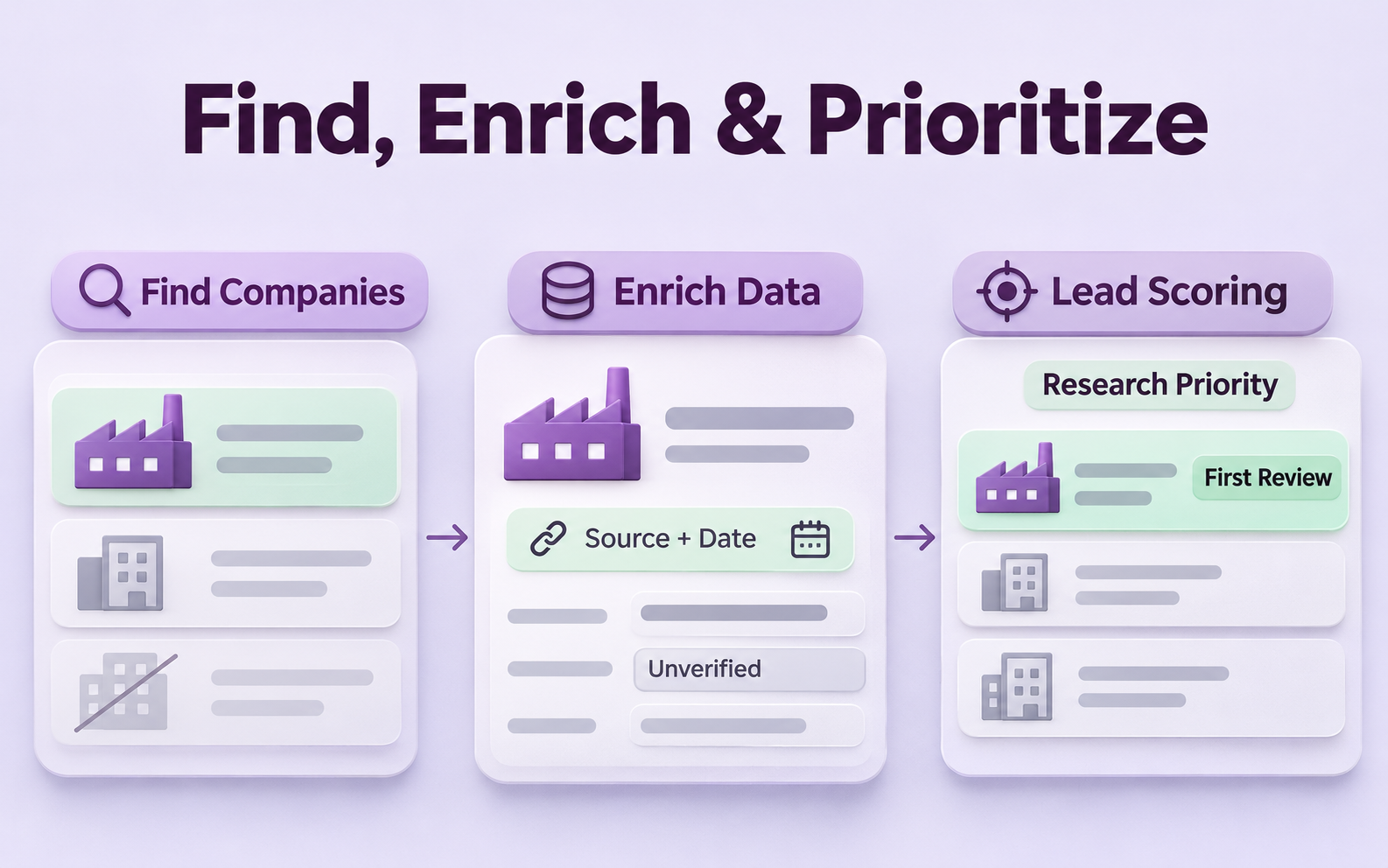
1. Find Companies That Fit Your Criteria
Define industries, regions, use cases, and exclusions before searching for candidates. Prioritize fit with your services. Set rules for existing customers and companies already in discussions.
2. Enrich and Organize the Data
Add fields such as company details, job roles, and public developments. Save the source and date. Distinguish parent companies, subsidiaries, and regions so unrelated data stays separate. Flag fields that lack evidence for review.
3. Prioritize Leads With Lead Scoring
Lead scoring uses rules or a model to rank prospects. Evaluate company fit, engagement, and recent signals separately. A high score makes an account worth researching sooner. Buying intent still needs verification.
3. Applications 4–6: Turn Research Into Conversations
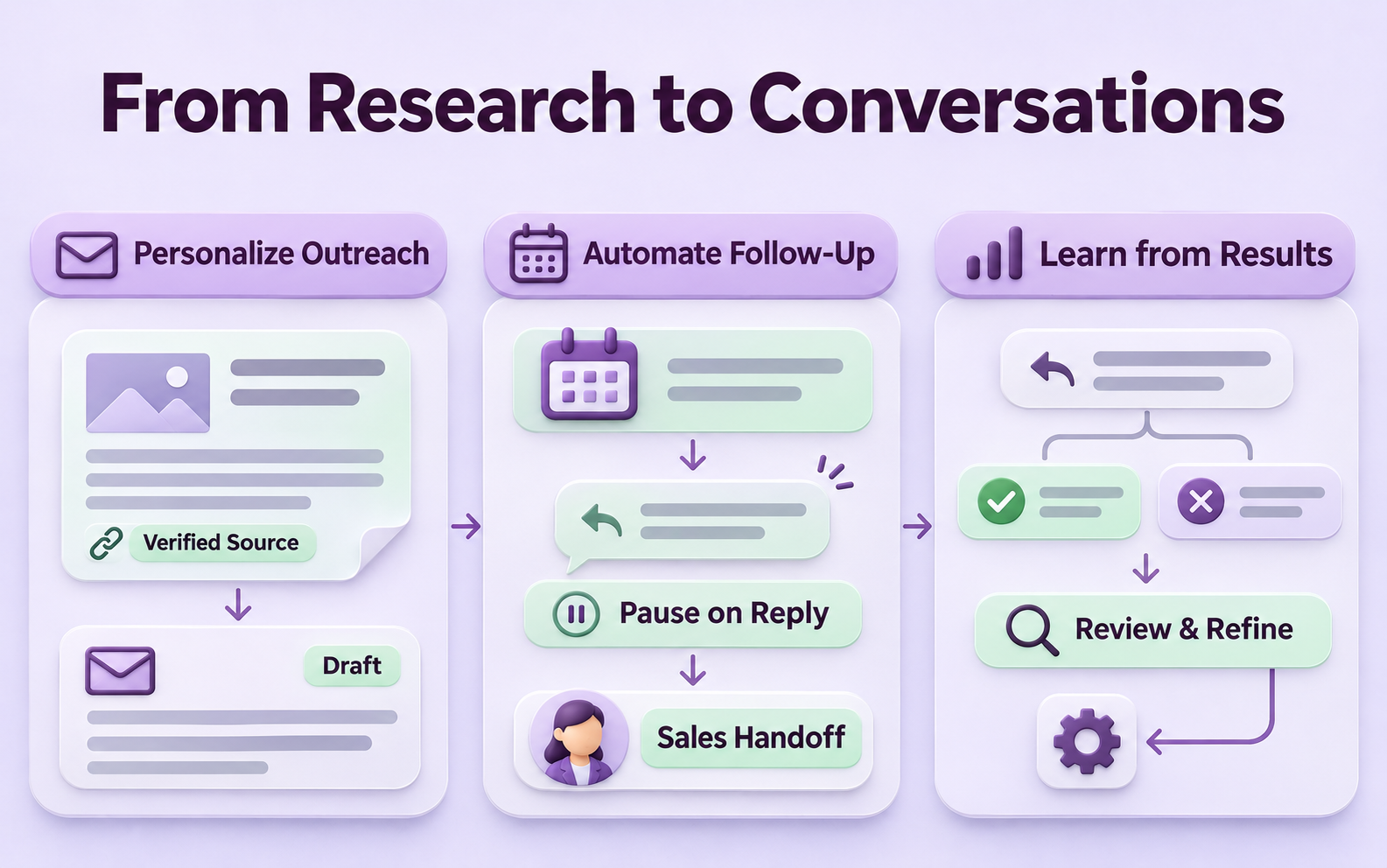
4. Personalize Outreach Using Verified Facts
AI can summarize public news and draft messages. Explain why your service could be relevant. For example, ask a question about a confirmed market expansion instead of treating a potential pain point as something the prospect has acknowledged.
5. Set Follow-Up and Handoff Rules
The system can create tasks, remind sales, or run approved outreach. Set conditions to stop automation when someone replies, asks you to stop contacting them, or already has an account owner. This keeps prospects from receiving irrelevant follow-ups.
6. Use Results to Refine Prospecting
AI can summarize replies and categorize disqualification reasons, such as industry mismatch, the wrong contact role, or poor timing. Review the categories regularly. Use the results to adjust criteria and messaging before increasing send volume.
4. Example: A Systems Consultancy Prospects in New Markets
Suppose a consultancy wants to reach companies expanding overseas. Its lists are scattered, teams duplicate research, and marketing hands over accounts without explaining why it chose them. Sales spends time checking the same information again.
Choose a service and target market, gather company details and signals of expansion, then check the data and ranking. Have sales review the findings before drafting personalized outreach. Record the owner and follow-up status in the customer relationship management (CRM) system.
Track how long it takes to produce usable research, how often data needs correcting, and whether outreach leads to relevant replies, qualified meetings, and sales opportunities that progress. In this hypothetical example, the team can expand one application at a time and should measure any revenue impact.
5. Six Checks Before Rollout
- Which bottleneck should this application address: finding companies, researching them, or following up?
- Do required data points have a source, a date, and an indication of reliability?
- Can sales understand and review the score or recommendation?
- Have the facts in the message been confirmed, and does the tone fit the brand?
- Have you tested how the workflow handles duplicates, requests to stop contact, and replies?
- Has someone been assigned to track results and adjust the criteria and workflow?
If research quality is inconsistent, improve company discovery and data organization first. If the data is reliable but no one acts on it, clarify responsibilities. Automating a broken workflow usually makes tasks pile up faster.
6. Frequently Asked Questions
Do we need to roll out all six AI prospecting applications together?
No. Start with the clearest bottleneck. Confirm the output is usable and someone can act on it before expanding.
Does lead scoring require a predictive model?
No. When data is limited, start with explainable rules. Assess historical data and product requirements before choosing a model.
Can we fully automate personalized outreach?
Set up a review process for facts, brand tone, and contact rules first. Match the level of automation to data reliability and your team’s capacity to manage it.
Does a higher reply rate mean the workflow is working?
Not necessarily. Rejections and irrelevant replies can also raise the rate. Track relevant responses, qualified meetings, and the quality of later sales opportunities.
7. Conclusion
AI prospecting works when research informs outreach and the results shape the next round. Start with one small workflow, then expand based on what you learn.

To assess how a tool fits your sales process, talk with LeadsTech about data requirements, integration, and what to prioritize in a pilot.

8. Further Reading
- B2B Website Marketing Strategy: From Content to Lead Conversion
See how content, your website, and the sales team can work together to develop opportunities. - CRM for Global B2B Businesses: A Salesforce Implementation Guide
Plan how to bring lead lists, customer data, and sales workflows together across teams.
Related Articles
Enterprise AI MarTech Trends Analysis 2024-2029 Outlook Report
From AI content productivity tools to a core engine for revenue growth and marketing transformation
*The PDF will be sent directly to your inbox.
Email Error
Please enter a valid email address.
Thank You!
The whitepaper has been sent to your inbox. If you don’t see it, please check your spam or promotions folder.