
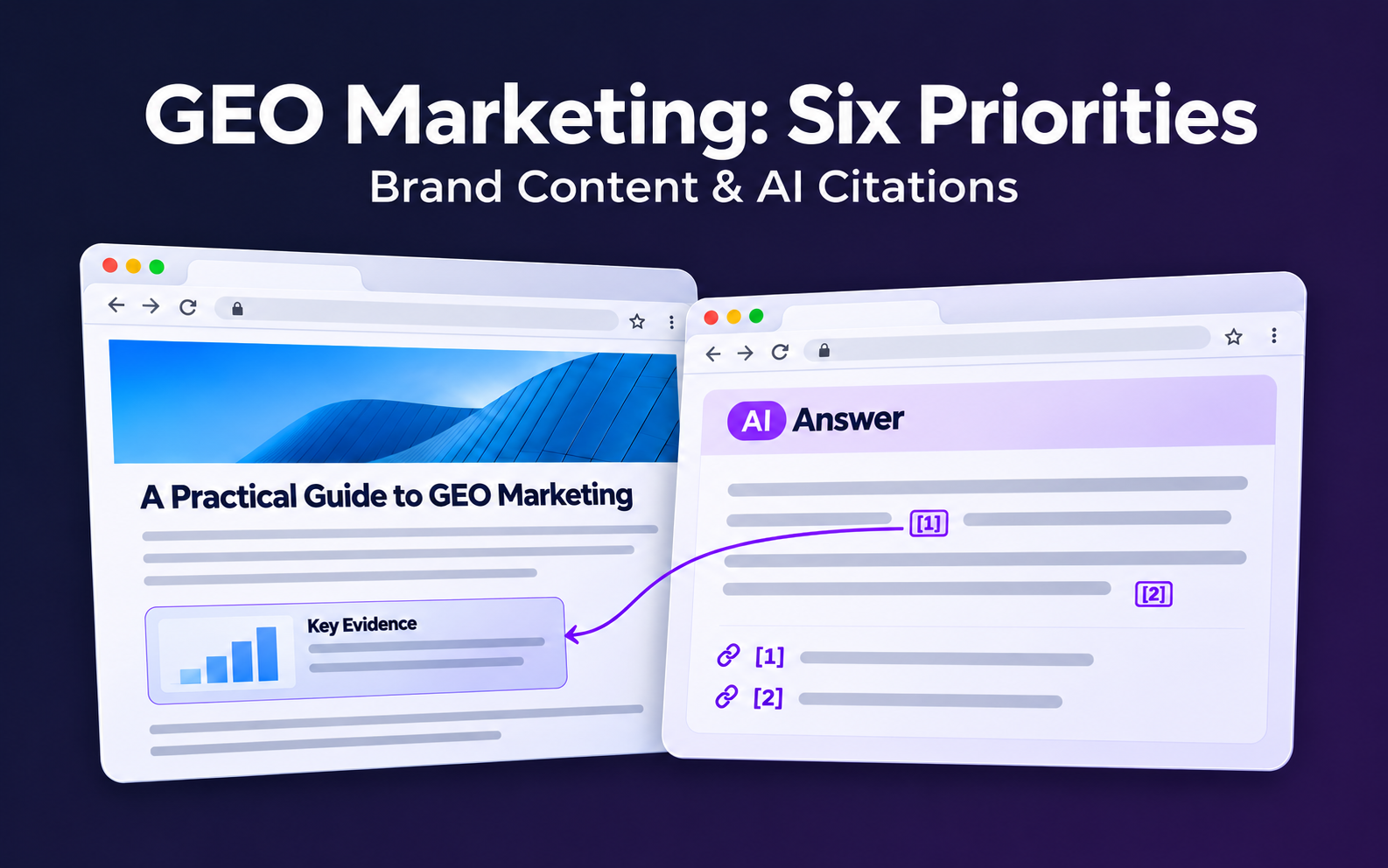
When you start with GEO marketing, should you write more articles, improve your website, or get more third-party coverage? Begin with the questions customers ask and the gaps in your current content. These six priorities explain what each effort should produce, who should own it, and when to review it.
1. Key Takeaways (TL;DR)
Start with customer questions and connect them to evidence in your content, website updates, public brand information, and measurement. Seek credible and relevant third-party coverage. A high volume of mentions cannot guarantee citations. Define a deliverable and an owner for each task. Complete one improvement cycle for a single topic before expanding.
2. How Do You Turn GEO Marketing into Concrete Tasks?
Generative Engine Optimization (GEO) focuses on how visible a brand and its content are in AI-generated answers. When planning the work, identify which customer questions still need clearer answers before setting a monthly publishing target.
LeadsTech’s SEO and GEO optimization services help teams review their website, content, and search performance and prioritize improvements. Choose one important service and work through question research, updates, and verification.
Give each task a result the team can verify, such as a map of customer questions, a reviewed page, or a citation log. These outputs show whether the work is making progress.
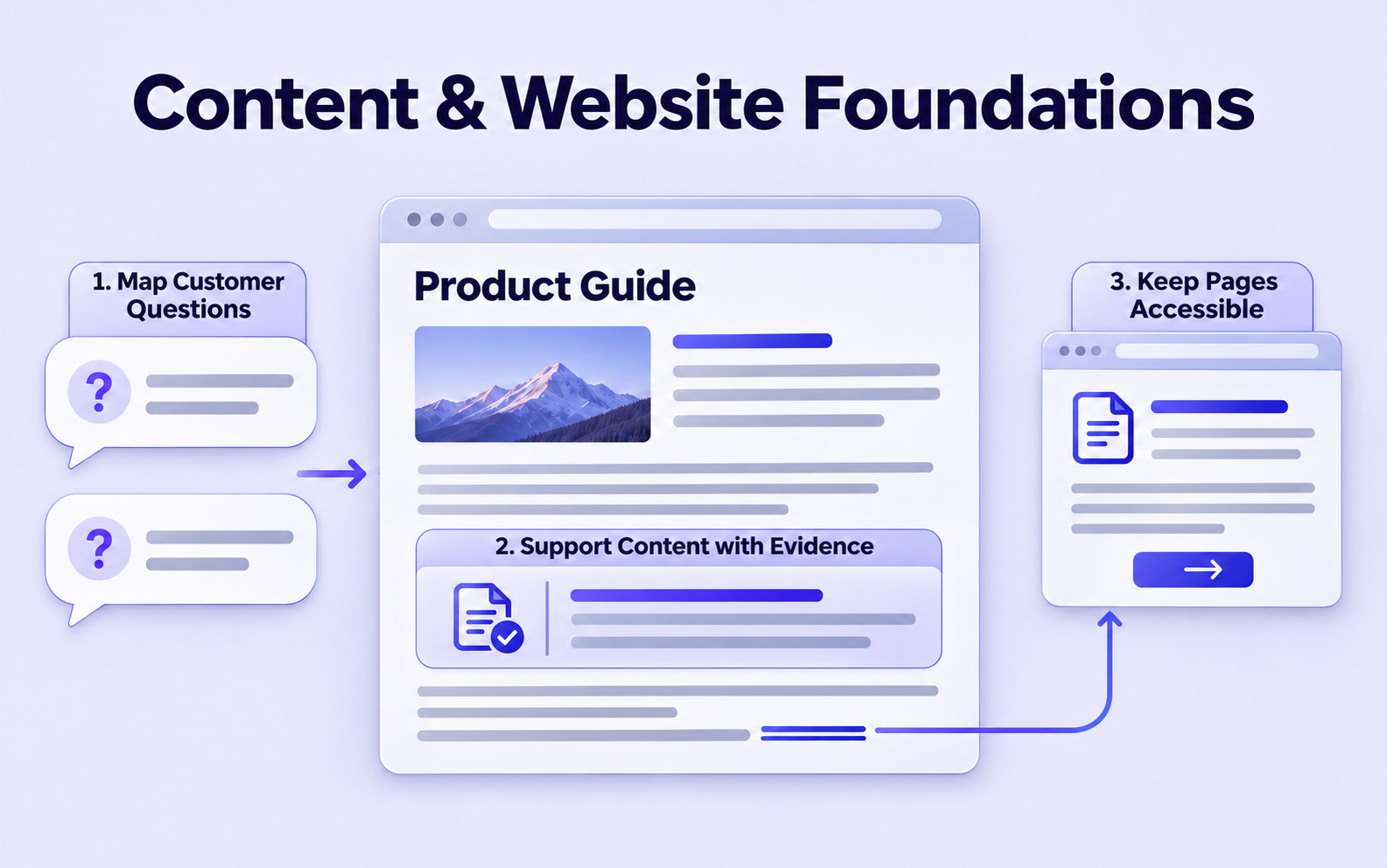
3. Priorities 1–3: Build the Content and Website Foundations
1. Map Customer Questions to Pages
Ask sales and support teams for questions about requirements, comparisons, implementation, and maintenance. Mark the questions you already answer and identify gaps. Remove sensitive customer data before using the findings to plan topics.
2. Support Brand Content with Evidence
Explain who each page is for, what conditions apply, what the limitations are, and who is responsible. Use case material cleared for public use. Where verified figures are unavailable, explain how readers can assess and verify the result.
3. Keep Important Information Accessible and Consistent
Check that key pages load, essential text is complete, and product and service names match across pages. Use internal links to guide readers to the next step and prioritize technical changes based on observed issues.
4. Priorities 4–6: Connect Third-Party Information and Ongoing Management
4. Build Third-Party Coverage with Credible Material
Review key publications, business directories, and partner pages. Correct outdated or inaccurate company information first. Bring useful material to professional discussions, whether original insights or approved case studies.
Third parties decide whether to publish or correct a listing or article. Avoid fake reviews and clearly disclose paid coverage.
5. Track Citations Consistently
Record the question, platform, language, market, date, and answer. Track brand mentions, source citations, and factual errors separately. Review these observations alongside site readership and qualified inquiries to assess their value.
6. Assign Owners Across Teams
Marketing organizes questions and edits content, product teams verify facts, web teams handle technical changes, and brand teams maintain external information. When a product changes significantly, review related pages at the same time.
5. Example: Plenty of Articles, but Buyer Questions Go Unanswered
Suppose a professional services firm has published many articles on industry trends. Buyers still ask what implementation covers, who they need to involve internally, and how to choose between options. Sales has to explain these points on every call.
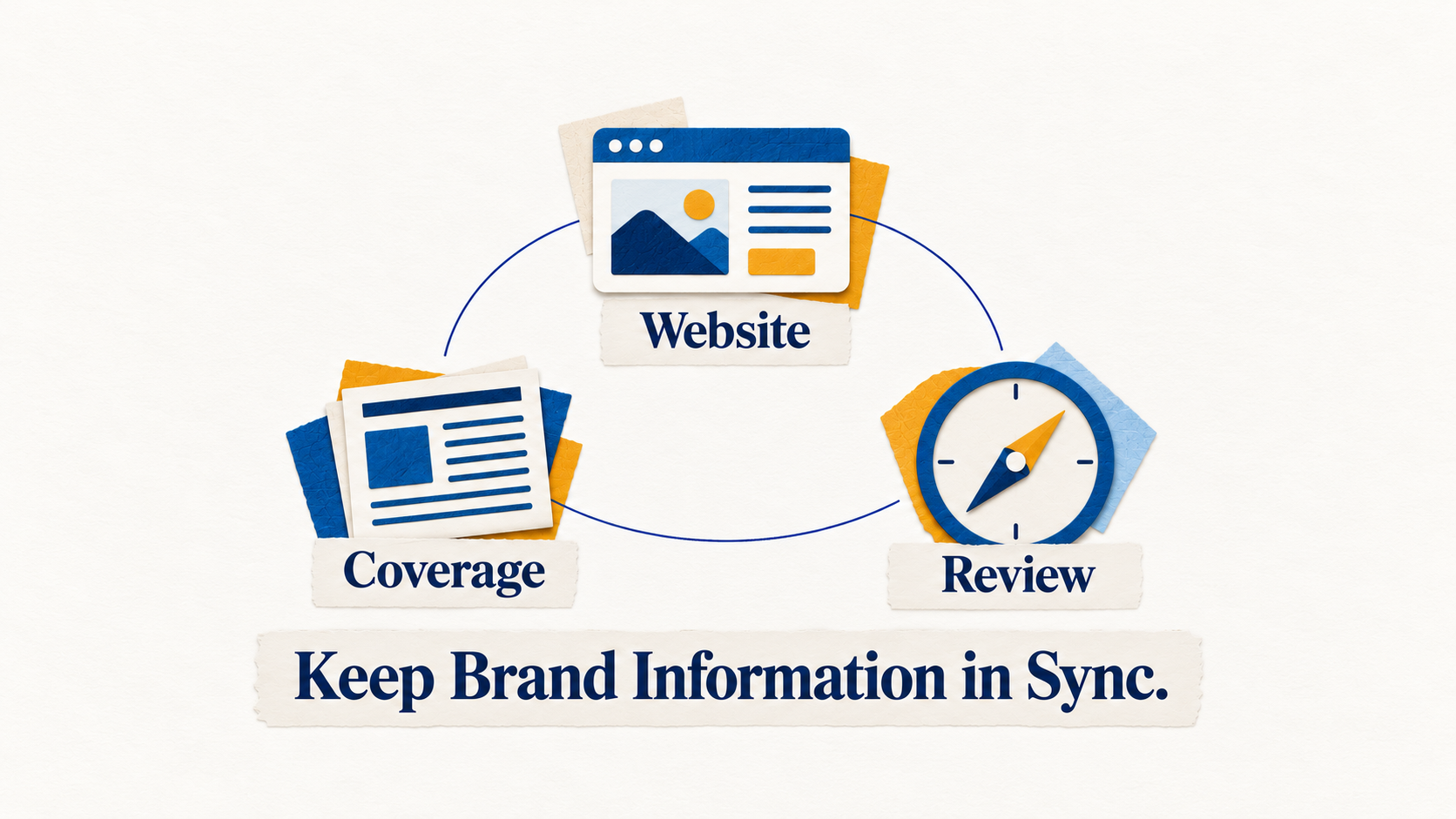
The team can collect those questions and update service pages and comparison content with clear responsibilities, preparation steps, and limitations. Check whether third-party descriptions still reflect an outdated scope, then log corrections and schedule regular checks.
Measure how well key questions are covered, how much detail inquiries contain, which issues still need repeated clarification, and whether AI citations describe the service accurately. In this hypothetical example, additional articles or coverage alone cannot establish that sales opportunities have grown.
6. Five Steps to Prioritize GEO Work
Audit
Choose one topic and document its questions, pages, and current state.
Prioritize
Address significant inaccuracies and gaps in the information buyers need to make decisions first.
Create
Add the missing evidence and conditions, then ask product and sales teams to review them.
Sync
Update your website and public brand information you can manage, and document any limitations.
Review
Use a consistent method to track changes, then adjust the next round based on feedback.
Separate work you completed from outcomes you need to observe. You can verify page changes directly. AI citations and third-party updates need ongoing monitoring because a vendor cannot fully control them.
If resources are limited, start with a few important pages and a process for maintaining them. That is easier to sustain than launching many pages without assigning anyone to keep them current.
7. Frequently Asked Questions
Does GEO marketing require publishing a lot of new articles?
It can be more valuable to update key pages, add information buyers need, and resolve inconsistencies.
Can third-party coverage guarantee AI citations?
No. Coverage can add public sources, but whether a platform cites them depends on the question and other factors.
Can the marketing team handle GEO on its own?
Product, technical, and sales teams usually need to help verify facts, fix website issues, and gather authentic customer feedback.
Should we revise all our content if citations drop suddenly?
Check what changed in the sample, platform, or data, then review the relevant pages. One fluctuation is too little evidence for a broad rewrite.
8. Conclusion
Putting GEO marketing into practice means linking customer questions to evidence and assigning responsibility. Build a repeatable process first, then expand based on what you observe.

If you’re planning content and website improvements, LeadsTech can help you choose priority topics, assign responsibilities across teams, and plan how to measure results.

9. Further Reading
- SEO vs. GEO: Search Engine Optimization and Generative AI Optimization
See what traditional search and AI-generated answers have in common and how to monitor each. - SEO, GEO, and AI Search Growth Strategy: Increase Brand Visibility and Generate Leads
Bring website content, technology, and business goals into a single growth plan.
Related Articles

Enterprise AI MarTech Trends Analysis 2024-2029 Outlook Report
From AI content productivity tools to a core engine for revenue growth and marketing transformation
*The PDF will be sent directly to your inbox.
Email Error
Please enter a valid email address.
Thank You!
The whitepaper has been sent to your inbox. If you don’t see it, please check your spam or promotions folder.