
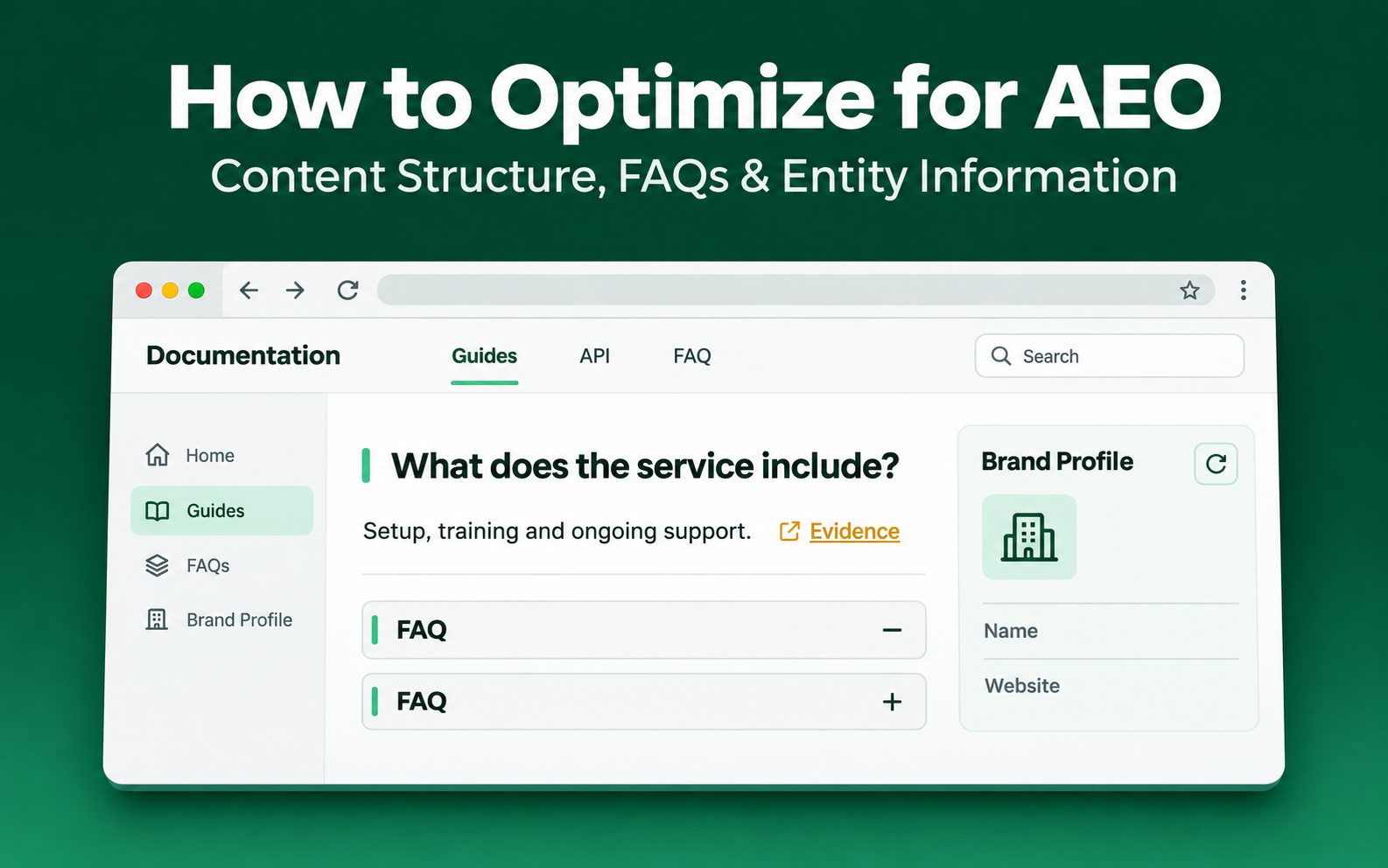
An article has question headings and an FAQ, yet readers still cannot find the answer. Start your AEO review by checking whether the information is complete, the conditions are clear, and company and product details agree across pages. This guide offers practical editing methods you can apply to one important page to improve its quality and make it easier to maintain.
1. Key Takeaways (TL;DR)
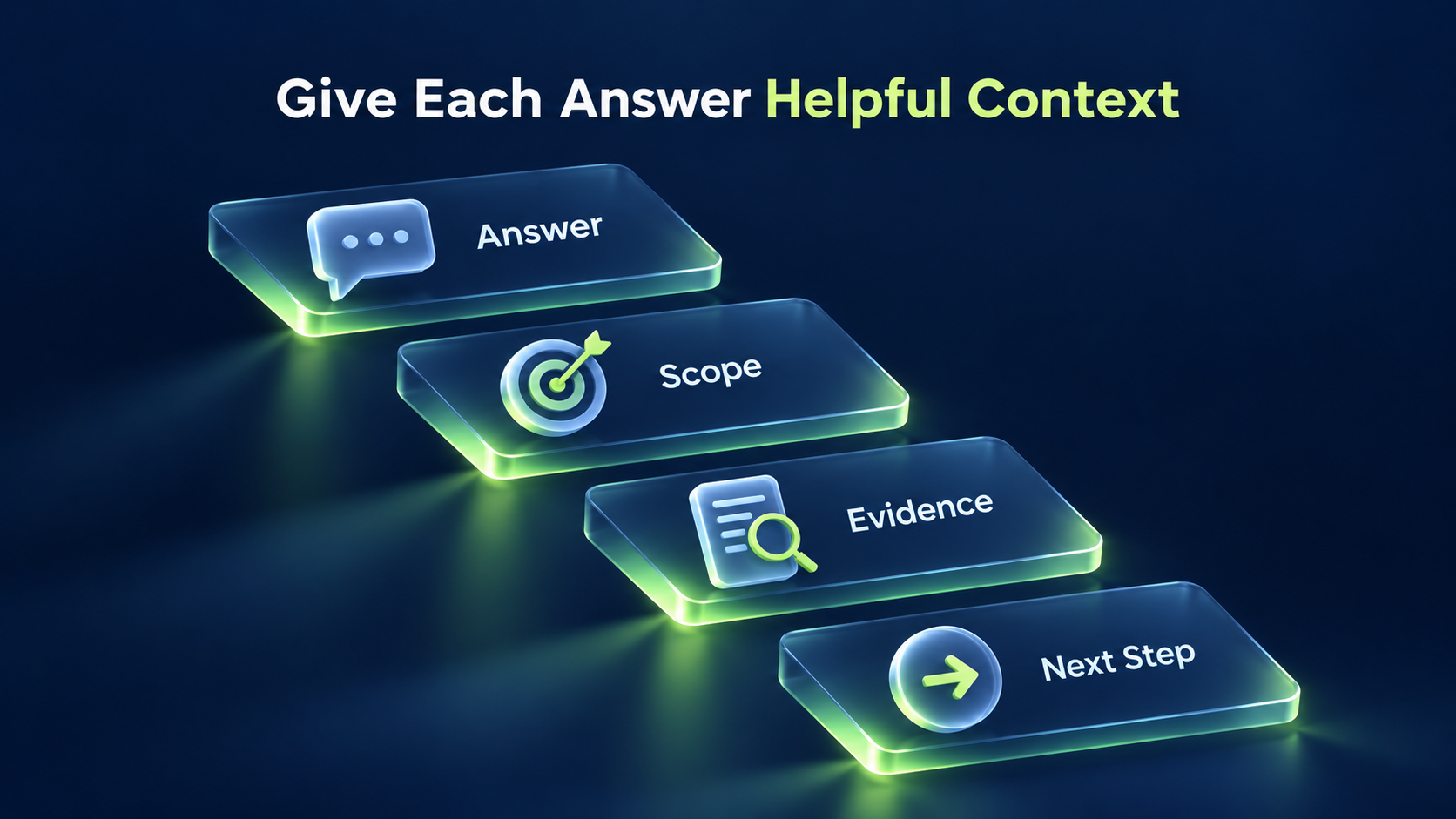
Start by answering a question that affects the reader’s decision, then explain the scope, provide evidence, and give a next step. Use FAQs to address real concerns and keep company, product, and service relationships consistent across pages. Clear formatting makes content easier to read. AI citations still depend on which sources a platform selects.
2. How Do You Optimize for AEO? Define the Task for the Page
Answer engine optimization (AEO) focuses on how search experiences that provide direct answers understand and present content. Before editing, write down what readers should be able to decide after reading the page, such as whether a solution fits or what data they need to prepare.
LeadsTech’s SEO and GEO optimization services can help identify topic gaps and review your content structure and website fundamentals. Turn recurring sales questions into specific tasks for each page before changing the wording or keywords.
Answer the main question on the page and link to related pages for the details. That reduces duplication and gives readers a clear next step.
3. What Information Makes an Answer Complete?
Give the direct answer first, then explain when it applies. If the topic is system integration, explain what data sources are required, who handles maintenance, and which conditions may affect the work.
Add evidence readers can verify and explain the limits. Describe the product’s capabilities, the consultant’s services, and the customer’s preparation separately so buyers understand what a purchase includes.
Give readers a concrete next step, such as listing their current systems and fields. Use these elements as an editing checklist and vary the wording to fit each answer.
4. How Do You Write FAQs That Add Value?
Use frequently asked questions (FAQs) to address concerns beyond the main text, such as who the service is for, what limits apply, who handles maintenance, or how to compare options. Answer each question directly, then explain any necessary exceptions.
Avoid turning every heading into a question and repeating the text. If customers want to know who updates the system after launch, explain who owns that work.
Google no longer displays FAQ rich results in Search. FAQs can still answer readers’ questions. Evaluate markup based on what your site needs, and keep in mind that it cannot guarantee AI citations.
5. How Do You Keep Entity Information Consistent?
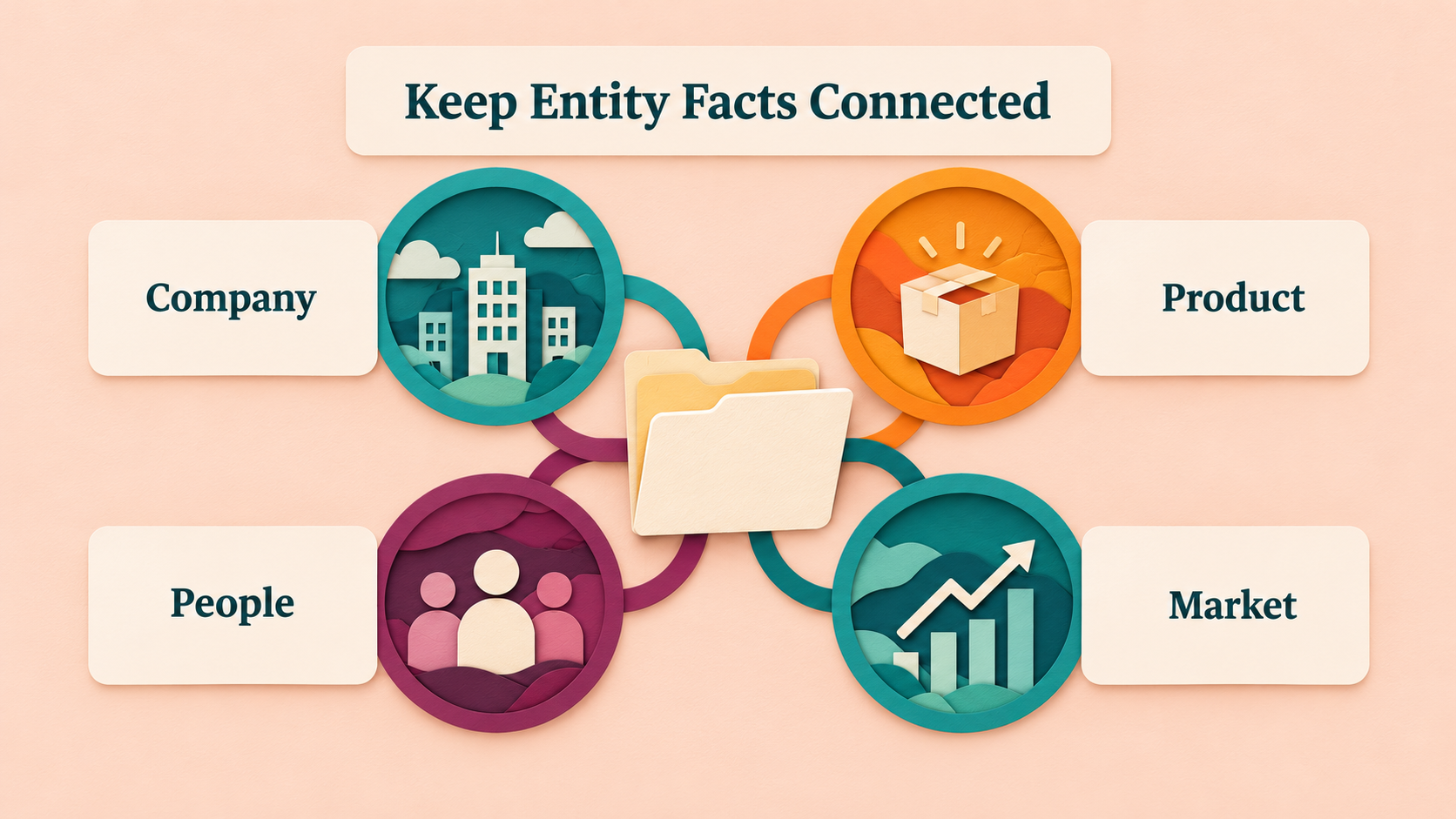
Entity information describes identifiable things such as companies, products, people, and markets, along with the relationships between them. Use consistent official names, URLs, service scopes, and product relationships. Assign someone to keep them current.
If a product page lists a supported market while a service page still shows an old restriction, readers cannot tell which is correct. Different pages can emphasize different details while keeping the core facts consistent.
Structured data uses a standard format to help systems interpret a page. It should reflect what the page actually says. Valid syntax alone cannot verify facts or replace the text.
6. Example: Clarifying a Vague Integration Service Description
Suppose a consulting company describes its offering as a “complete integration solution that quickly improves efficiency.” Customers cannot tell what it includes, so sales has to spend extra time explaining the basics with every inquiry.
List the systems the team can assess, the fields customers need to provide, and how data quality affects the work. Then explain who is responsible for testing, handoff, and maintenance.
After technical and sales teams verify the details, track whether customers ask fewer repeat questions, submit more complete inquiries, and whether key answers appear and are cited accurately. This is a hypothetical example.
7. Eight Checks Before Publishing
- Does the title clearly identify the problem the reader needs to solve?
- Does the opening answer the question directly before introducing promotional language?
- Are technical terms explained and all relevant conditions included?
- Can readers distinguish features, services, and their own responsibilities?
- Can readers verify figures, case studies, and certifications?
- Does the FAQ address real concerns beyond the main text?
- Are company, product, and market details consistent?
- Has someone reviewed the content and planned future updates?
Ask a colleague who did not write the page to point out the answer, the limits, and the next step. If any of those still require guesswork, clarify the text before assessing search performance.
8. Frequently Asked Questions
Should we change every heading first when optimizing for AEO?
Start by defining what the page needs to help readers do and identifying what the answer leaves out. Headings improve navigation, but they cannot fill information gaps.
Does every answer need a fixed word count?
No. Let the question determine the length. Keep the answer easy to read and include any relevant conditions or exceptions.
Is it better to include more FAQ questions?
Prioritize common concerns that affect decisions. Repetitive or irrelevant questions make the page harder to read.
Will adding company structured data earn citations?
No. It can clarify company information. Content quality, website conditions, and platform decisions still matter.
9. Conclusion
Start with one complete answer. Explain the scope, evidence, and next action clearly, then keep the facts consistent across pages so readers can rely on the content over time.

To review gaps on important pages, talk with LeadsTech about topic planning, editorial workflows, and website improvements.

10. Further Reading
- SEO vs. GEO: Search Engine Optimization and Generative AI Optimization
See what traditional search and AI-generated answers have in common and how to monitor each. - SEO, GEO, and AI Search Growth Strategy: Increase Brand Visibility and Generate Leads
Bring website content, technology, and business goals into a single growth plan.
Related Articles

Enterprise AI MarTech Trends Analysis 2024-2029 Outlook Report
From AI content productivity tools to a core engine for revenue growth and marketing transformation
*The PDF will be sent directly to your inbox.
Email Error
Please enter a valid email address.
Thank You!
The whitepaper has been sent to your inbox. If you don’t see it, please check your spam or promotions folder.