
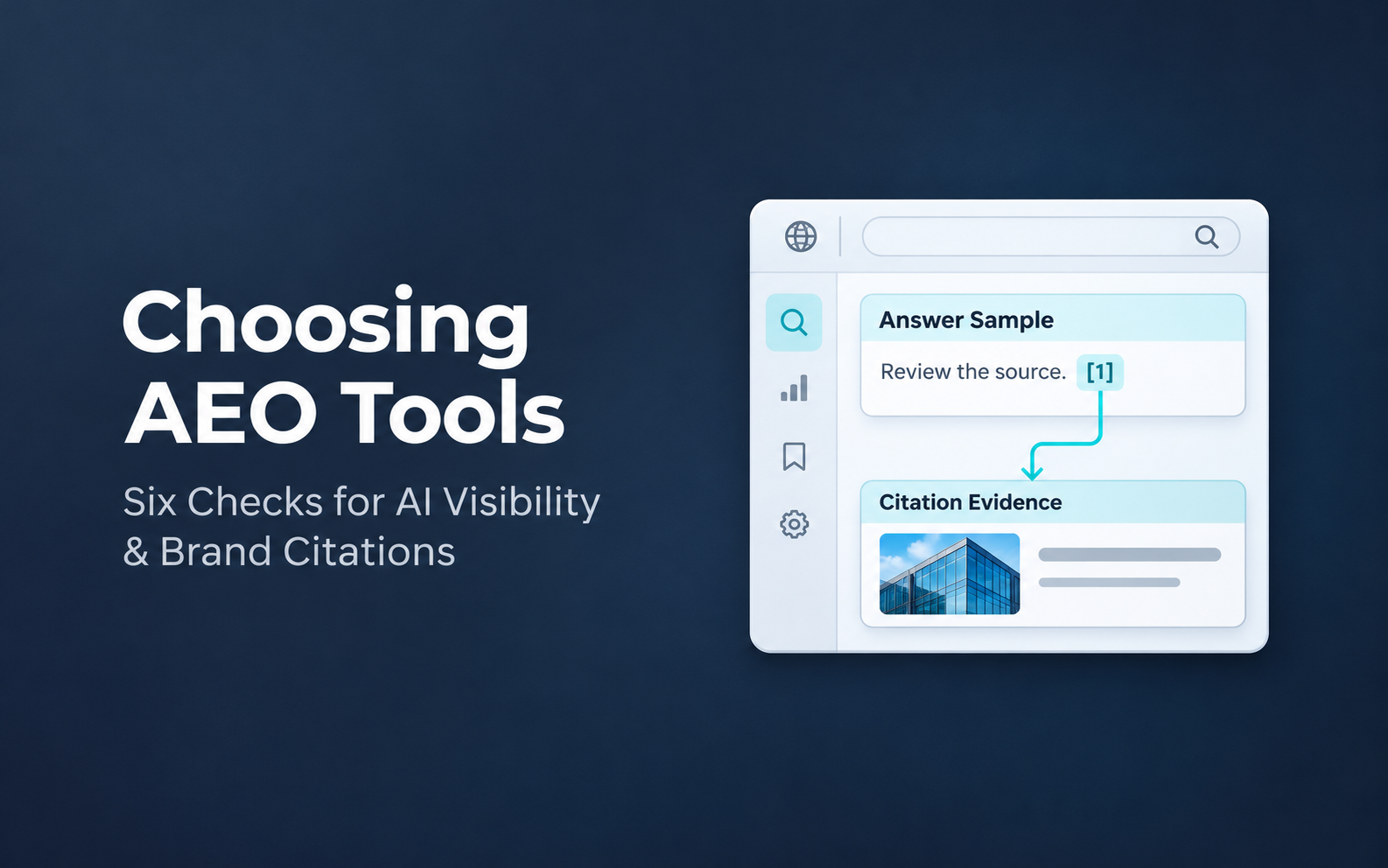
How to Choose AEO Tools: 6 Checks for AI Visibility and Brand Citations
AI, MarTech
25 November 2026
If an AEO tool shows a rising brand score, does that mean customers can find you more easily? The answer depends on which platforms, questions, and markets it measures. This guide presents six evaluation criteria to help businesses interpret AI visibility and citation data and turn observations into actionable content improvements.
1. Key Takeaways (TL;DR)
AEO tools need transparent methods, original answers, and verifiable sources to support decisions. AI visibility scores usually reflect specific samples and calculation methods, rather than visibility across the entire market. Test tools under the same conditions and confirm that findings can be linked to pages, assigned owners, and follow-up reviews.
2. Before Choosing AEO Tools, Define the Questions You Need to Answer
Answer engine optimization (AEO) tools can track brand mentions, source citations, and content gaps. AI visibility refers to a brand’s visibility in AI experiences, but vendors may use different data and algorithms.
First decide whether you need to discover new topics, compare competitors, or track important customer questions. LeadsTech’s SEO and GEO optimization services can connect the observation scope, content, and website analytics so the tool serves a specific goal.
For example, a report covering only English branded prompts cannot adequately explain product comparisons in Traditional Chinese. Clearer requirements make it easier to determine whether a tool fits.
3. How to Evaluate the Six Criteria
1. Platforms, Languages, and Markets
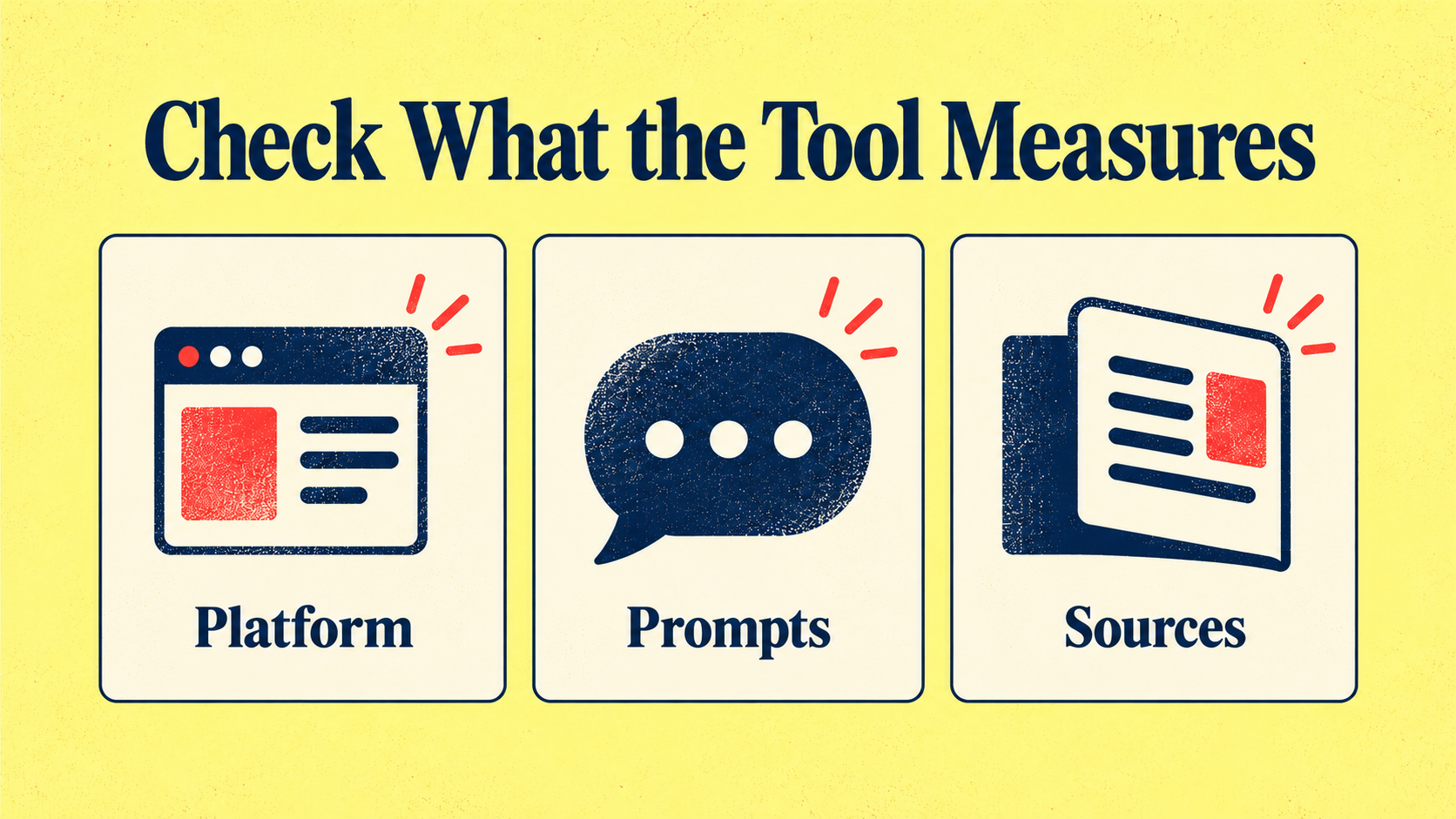
Confirm the actual interfaces, search modes, languages, and regions observed. Supporting a platform name does not mean covering every usage scenario. Vendors should also explain update frequency and gaps.
2. Question Samples
Broad databases help with discovery, while custom questions help track situations your business cares about. Include branded and nonbranded questions, comparisons, conditions, and implementation concerns. Avoid selecting only prompts likely to mention your company.
3. Answers and Source Evidence
Ask to see complete answers, timestamps, and cited pages. A brand name appearing, a website being cited as a source, and a page being retrieved without citation are different signals and should not be combined into one count.
4. Metric Definitions
Scores should explain their numerators, denominators, and samples. Keep estimated visibility separate from actual observations. Two tools calling a metric “visibility” does not make their values directly comparable.
5. Improvement Workflows
Can the tool link inaccurate descriptions or content gaps to specific pages and retain update and review records? An overall score without actionable issues offers limited help to a content team.
6. Cost and Data Management
Check charges for question counts, platforms, regions, update frequency, and historical retention. Also review exports, team permissions, and exit arrangements so important records do not remain locked in one tool.
4. How to Use Tools Alongside First-Party Data
Third-party tools help compare samples and explore markets, while platform reports provide actual data within their supported scope. For example, Google Search Console now provides a generative AI performance report, but that does not make every platform or every complete user prompt visible.
Website analytics and sales feedback can add information about behavior after a visit and qualified inquiries. Present data sources separately because their scopes differ, then interpret them together. Avoid converting estimated visibility directly into revenue.
5. Example: A Software Company Choosing a Tool Across Markets
Suppose a business serves customers in Hong Kong and overseas. A tool gives it a high overall score, but its samples are mostly English branded prompts. Those samples do not represent nonbranded comparison queries in Traditional Chinese and could misdirect content investment.
Build the same question list for each tool, specify markets and languages, and ask for the answers and sources. Then check whether the brand is described correctly, important pages appear, and which findings can become editorial tasks.
Assess trial value through coverage of essential scenarios, completeness of evidence, manual verification time, and actionable findings. This is a hypothetical example; sample results do not represent the entire AI search market.

6. Five Steps for a Tool Trial
- Define the purpose and the markets and languages you must observe.
- Create a representative list of branded and nonbranded questions.
- Verify original answers, sources, and metric calculations.
- Turn one finding into a page update and assign an owner.
- Review under comparable conditions and assess the methodology and total cost.
Flag changes to a tool’s model, samples, or algorithm in your reports. Otherwise, a chart’s rise or fall may reflect a measurement change rather than a real change in brand performance.
7. Frequently Asked Questions
Does a higher AEO tool score mean a stronger brand?
Interpret it within the tool’s samples and definitions. Also check whether the questions are relevant and the brand descriptions are accurate.
Can we track only questions containing our brand name?
That is insufficient. Branded questions help check descriptions, while nonbranded questions cover situations where customers do not yet know your business.
Can citation counts be treated as clicks?
No. A citation does not mean someone clicked it. Observe and define the two separately.
Which tool is right when results disagree?
Compare platforms, timing, samples, and algorithms first. Differences may reflect methodology rather than one tool being entirely wrong.
8. Conclusion
When choosing AEO tools, make sure every important number can be traced back to evidence and action. Transparent methods and sustainable workflows offer more decision value than a single high score.

To plan AI visibility monitoring and content improvements, talk with LeadsTech about question samples, website fundamentals, and performance measurement.

9. Further Reading
- SEO vs. GEO: Search Engine Optimization and Generative AI Optimization
Understand the shared foundations of traditional search and generative answers, along with their different observation methods. - SEO, GEO, and AI Search Growth Strategy: Increase Brand Visibility and Generate Leads
Bring website content, technology, and business goals into a single growth plan.
Related Articles
Enterprise AI MarTech Trends Analysis 2024-2029 Outlook Report
From AI content productivity tools to a core engine for revenue growth and marketing transformation
*The PDF will be sent directly to your inbox.
Email Error
Please enter a valid email address.
Thank You!
The whitepaper has been sent to your inbox. If you don’t see it, please check your spam or promotions folder.