
Multilingual Website hreflang Architecture and SEO
AEM Sites, Content Management System (CMS), Translation Management System (TMS)
17 September 2026
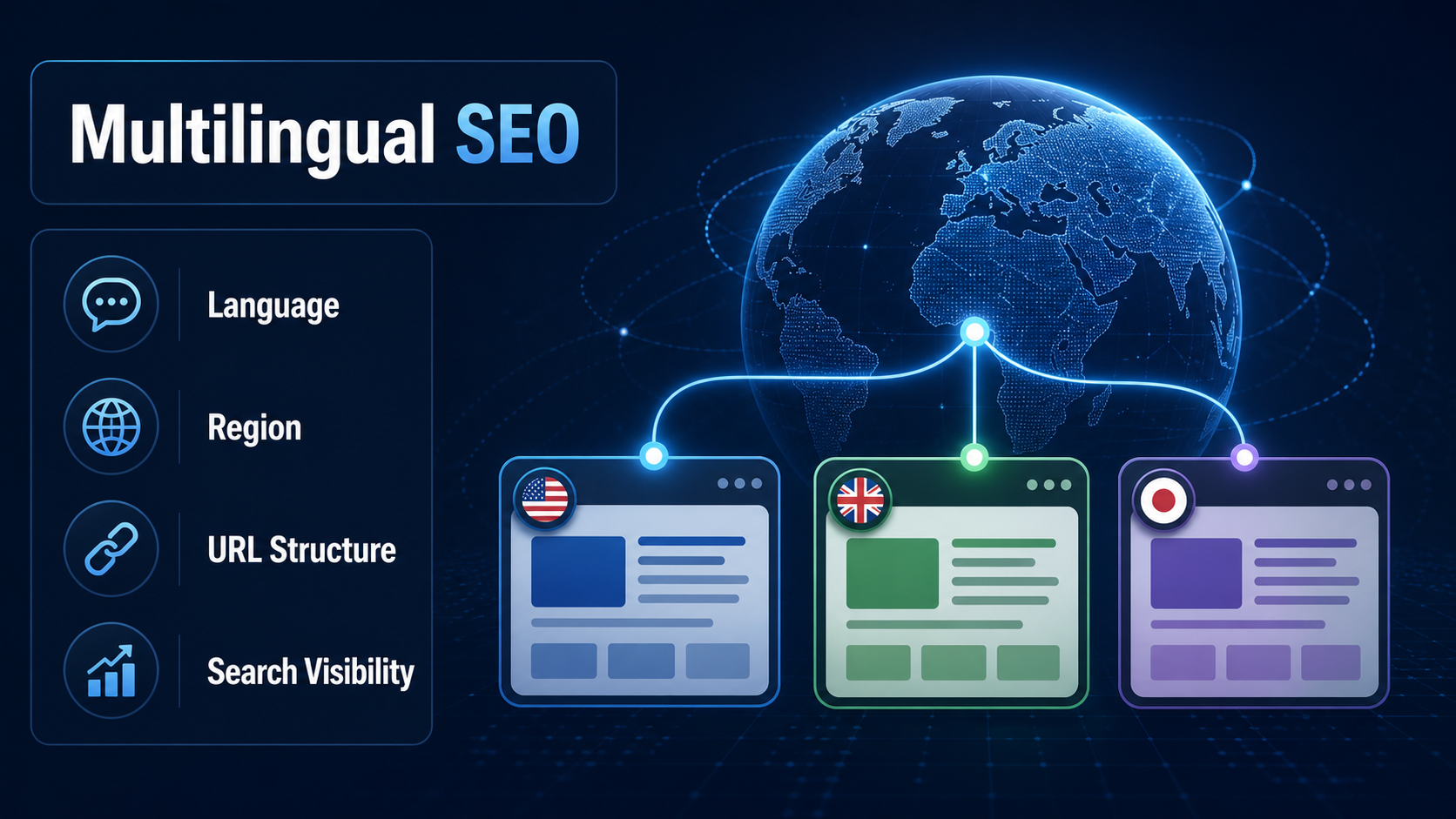
Many businesses launch English, Traditional Chinese, Simplified Chinese or regional versions of their websites, only to find that search results show the wrong language, pages compete with one another, or some versions are not indexed at all. This is not simply a matter of adding a few tags. It also involves URL structure, content localisation, website architecture and ongoing monitoring. LeadsTech’s SEO and GEO optimisation services can help businesses review multilingual website architecture, search visibility and content strategy together. This article outlines practical approaches to planning hreflang and checking multilingual SEO.
Summary
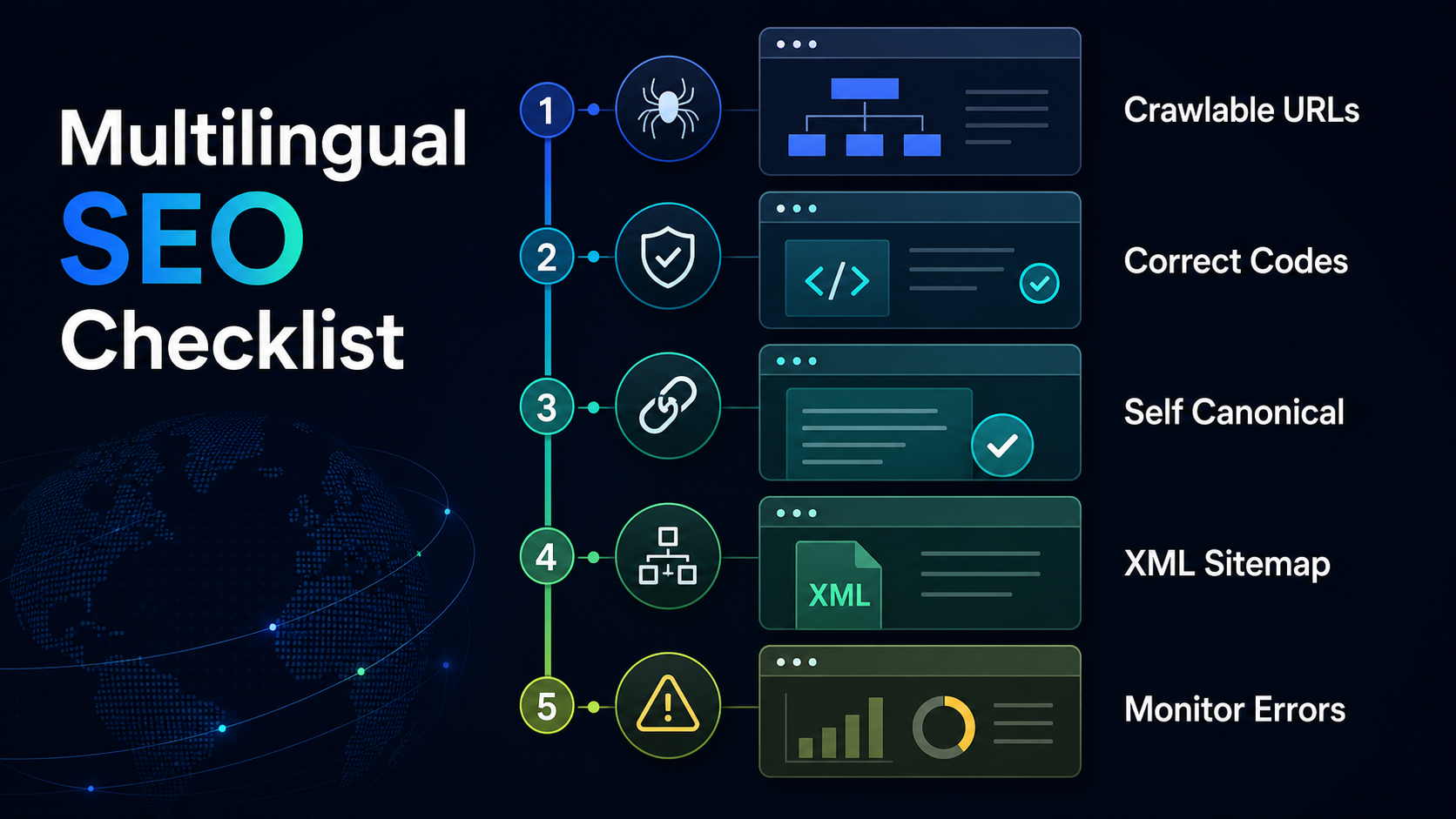
hreflang tells search engines about the language or regional versions of the same content, increasing the chance that the appropriate page will appear in search results. Start by defining language and region codes, then build a complete set of mutually referenced versions while checking canonical tags, XML Sitemap coverage and crawlability. Businesses should not only check whether the tags exist, but also monitor errors, indexing status, organic traffic and query conversions across markets.
1. Common SEO Problems on Multilingual Websites
The challenge with multilingual websites is usually not a lack of translation, but that search engines cannot clearly determine the purpose of each version. Common situations include identical content on an English page and a Hong Kong English page without clear regional signals; Chinese pages using the same URL parameters, creating version-management problems; or simply copying pages for a new market without localised titles, currencies, contact details and keywords.
Suppose a B2B industrial equipment company serves Hong Kong, Taiwan and the UK, using /hk/, /tw/ and /uk/ for its product pages. Even if the three versions differ only by language, the business still needs to clarify which pages serve which market and ensure that every version can be crawled and indexed independently. Otherwise, users may see delivery regions or contact details that do not apply to them in search results. More traffic does not necessarily mean more qualified enquiries.
2. What Is hreflang and What Does It Solve?
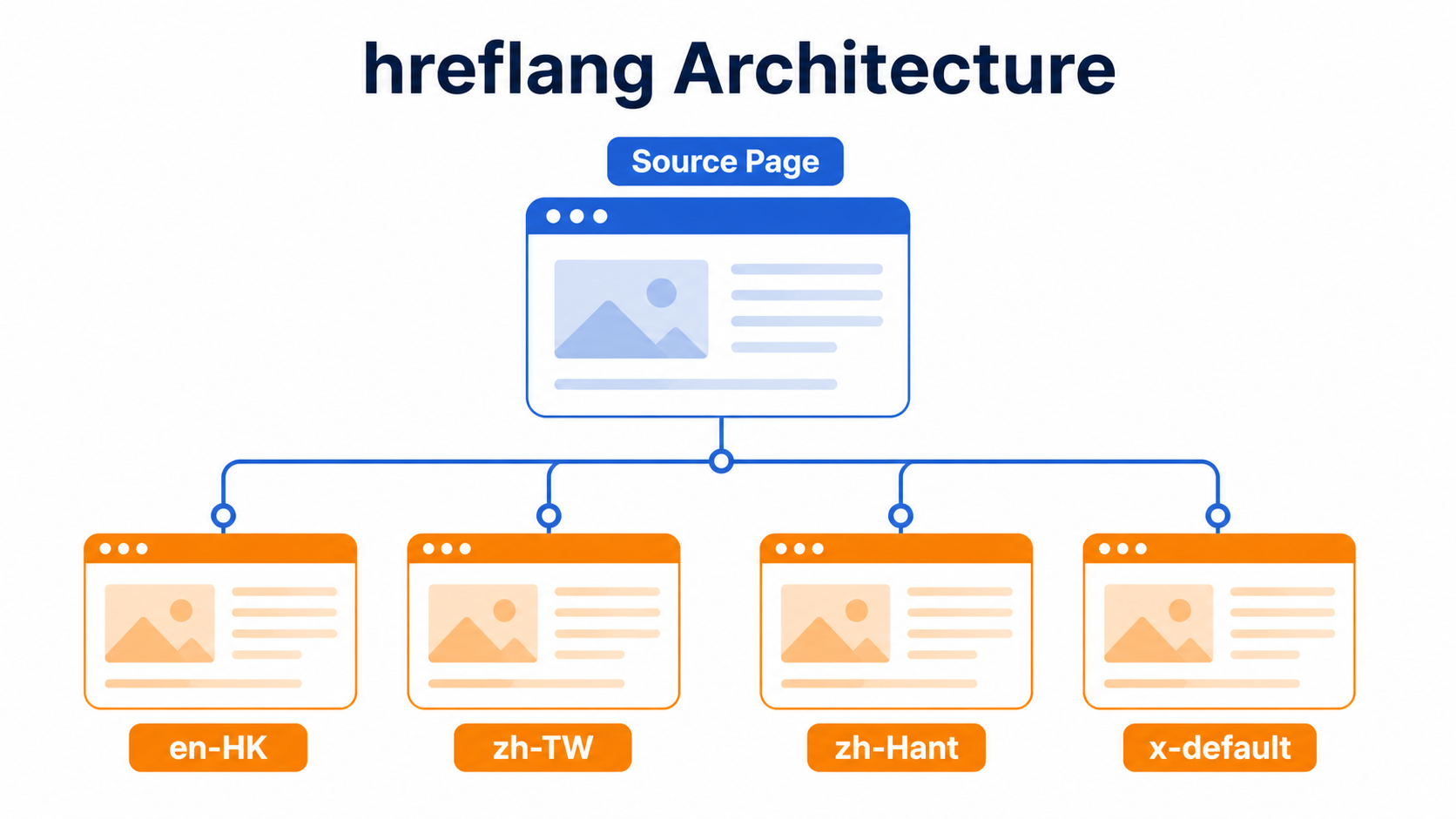
hreflang is a page-level language and regional signal. Common values include zh-Hant, zh-TW, en-HK and x-default. It is not a translation tool or a ranking guarantee; it helps search engines understand the relationship between different versions.
Businesses should distinguish between language and region. en represents an English version, while en-HK represents an English version for Hong Kong. Regional segmentation is only necessary when content, service scope or commercial conditions genuinely differ by region. Each version should normally reference itself and every other applicable version to form a complete reciprocal relationship. x-default can be used for an entry page that does not target a specific language or region, but it cannot replace the primary language version.
3. How to Plan a hreflang Architecture
Define the URL architecture first
Common approaches include subdirectories, subdomains and country-code domains. For most businesses, subdirectories are easier to manage and maintain authority, such as /tc/, /sc/ and /en/. More independent domains or subdomains should be considered when markets have different legal requirements, products, pricing or teams.
Build a language and region mapping table
Do not guess the versions from existing pages. Create a URL mapping table covering the canonical URL, language code, region code, content owner and last review date for each key page. For pages without a corresponding translation, decide whether to keep a single-language version rather than mass-producing low-quality near-duplicates.
Choose the deployment method
hreflang can be implemented in the HTML <head>, HTTP headers or an XML Sitemap. The choice should match the CMS and the scale of the website. HTML is easier to manage when there are fewer pages; larger websites may consider Sitemap management, provided the generation rules continue to reflect new, deleted and revised pages.
Check canonical URLs and internal links together
The canonical should point to the primary URL for the same language or regional version. It should not send every version to the English page. Language switchers should also link to the corresponding page rather than always returning to the homepage. When these signals conflict, search engines may not display the expected version based on hreflang.
4. Common Errors and Diagnostic Methods
Common errors include incorrect code formats, URLs returning 404, pages marked noindex, one-way references between versions, or language switching that leads to an unrelated page. Another issue occurs when a CMS generates hreflang tags automatically but fails to update them after a website redesign, leaving a large number of broken references.
A practical diagnostic sequence is: sample key product, service and article pages; confirm that every URL loads correctly; check whether each version lists the complete set; then compare canonical URLs, internal links and the Sitemap. Finally, review indexing and country or regional data in search platforms. Do not rely solely on the green score from one crawler.
5. Multilingual SEO Implementation Checklist
- Is the target market for each language and regional version clearly defined?
- Do the language and region codes follow the correct standard format?
- Does every page list itself and every other valid version?
- Can every URL referenced by hreflang be crawled and return 200?
- Does each version’s canonical point to the correct version itself?
- Do translated pages have localised titles, content, contact details and commercial conditions?
- Does the XML Sitemap contain the correct versions and latest URLs?
- Are URLs revalidated after a redesign, page deletion or URL change?
- Are impressions, clicks and enquiries tracked separately across markets?
6. Frequently Asked Questions (FAQ)
Will hreflang directly improve website rankings?
It does not guarantee higher rankings. It mainly helps search engines understand language and regional versions and reduces the chance of showing an unsuitable page. Rankings still depend on content quality, technical SEO, authority and user experience.
Do we need hreflang if we only have English and Traditional Chinese?
It is usually worth implementing when the two versions serve users of different languages. First confirm that the two URLs are corresponding versions of the same content, and ensure that the translated content and website structure are ready.
Should hreflang be implemented in HTML or the Sitemap?
Either can work. The choice should depend on the website scale and CMS capabilities. Larger websites often consider Sitemaps, but they need reliable automation and validation to avoid outdated or incomplete mappings.
Must a multilingual website use country-code domains?
No. Subdirectories, subdomains and country-code domains each involve trade-offs. The decision should reflect the brand, management capability, legal requirements and operating model in each market.
7. Conclusion
The core of multilingual SEO is not adding hreflang once. It is building a maintainable relationship between versions and managing technical signals, localised content and target markets together. Businesses can start with key product pages and high-traffic pages, build a URL mapping table and then expand across the site.
If you need to review multilingual website architecture, hreflang, content localisation and search visibility, explore LeadsTech’s SEO and GEO optimisation services.
Learn about SEO and GEO Optimisation Services 
If your business is already facing indexing errors, version conflicts or inconsistent enquiry quality across markets, start with a website and data diagnostic before deciding what to fix first.

8. Further Reading
- Multilingual Website SEO/GEO Consulting Services: Improve Global Search Visibility: Learn more about multilingual SEO and GEO strategies.
- Website Translation and Multilingual SEO Management Guide: Explore multilingual SEO from translation workflows and content management perspectives.
- How Does a CMS Affect SEO? A Guide to Optimising Website Content Management Systems: Understand how CMS architecture affects search optimisation.
Related Articles

Enterprise AI MarTech Trends Analysis 2024-2029 Outlook Report
From AI content productivity tools to a core engine for revenue growth and marketing transformation
*The PDF will be sent directly to your inbox.
Email Error
Please enter a valid email address.
Thank You!
The whitepaper has been sent to your inbox. If you don’t see it, please check your spam or promotions folder.